
Shoulder Pain Under Scapula can cause discomfort during everyday activities such as lifting, reaching, turning, and sitting for long periods. It may result from muscle strain, poor posture, altered shoulder movement, or problems affecting the neck and shoulder joints.
Identifying the underlying cause is essential for choosing the right treatment. Physiotherapy plays an important role in managing musculoskeletal shoulder blade pain through targeted exercises, manual therapy, and movement correction to improve mobility, muscle function, and shoulder stability.
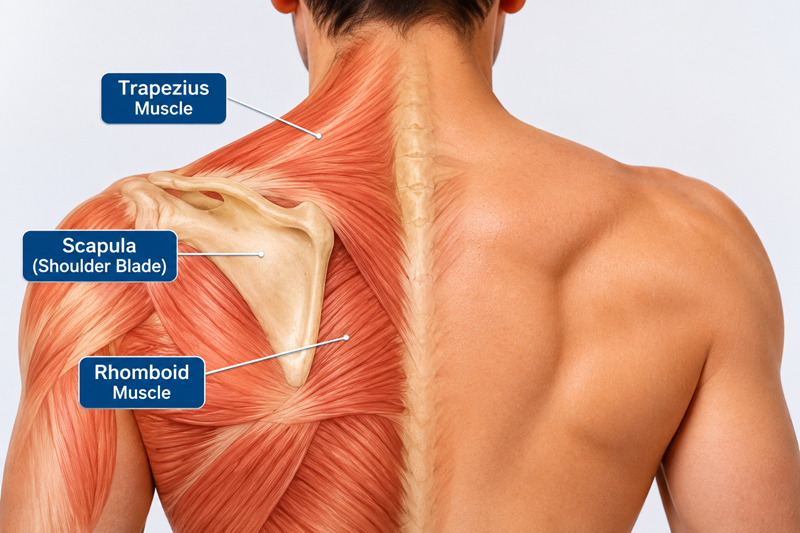
The scapula, commonly called the shoulder blade, is a triangular bone located on the upper back. It works with the shoulder joint and surrounding muscles to support arm movement and upper-body stability.
Pain in this area may feel sharp, dull, or persistent. Some people describe it as pain behind shoulder blade, while others experience an ache behind shoulder blade or pain underneath shoulder blade.
The discomfort may remain in one area or spread toward the neck, shoulder, and upper arm. Its location and pattern can help identify the structures involved, although a clinical assessment is needed to determine the actual cause.
Need Help With Pain or Recovery?
Get a personalized treatment plan from our senior physiotherapists at PhysioCare Dubai Healthcare City.
Book online or message us on WhatsApp.

Several musculoskeletal conditions can contribute to shoulder blade pain. The following table outlines common causes and their typical symptoms.
| Possible Cause | Common Symptoms |
|---|---|
| Muscle strain and tension | Localised aching, tenderness, and tightness |
| Poor posture | Upper-back discomfort after prolonged sitting |
| Scapular dyskinesis | Uncoordinated shoulder blade movement |
| Rotator cuff problems | Pain during lifting and overhead movements |
| Cervical spine conditions | Pain spreading from the neck toward the shoulder blade |
| Frozen shoulder | Shoulder stiffness and restricted arm movement |
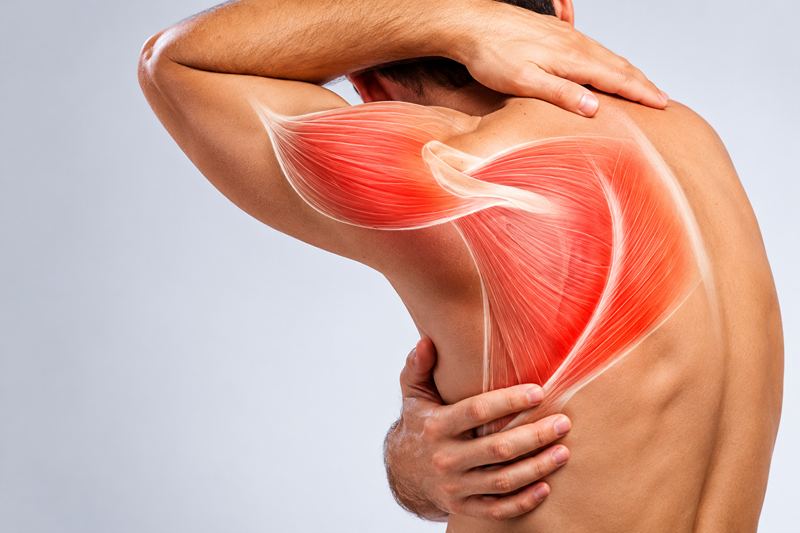
The rhomboids, trapezius, and levator scapulae help control shoulder blade movement. Heavy lifting, repetitive activities, and sudden movements can overload these muscles, causing tenderness and discomfort.
Physiotherapy uses soft tissue techniques, stretching, and progressive strengthening to address muscle tension and restore normal movement.
Extended computer use, looking down at a phone, and sitting with rounded shoulders can increase strain on the upper-back muscles. Over time, these habits may contribute to discomfort behind the shoulder blade.
Postural correction, ergonomic guidance, and targeted strengthening help improve shoulder positioning and reduce unnecessary muscular loading.
Scapular dyskinesis refers to altered shoulder blade positioning or movement during arm activities. Weakness or poor coordination in the serratus anterior and trapezius muscles may affect scapular control.
Physiotherapy addresses this problem through scapular stabilisation exercises and movement retraining to improve coordination between the shoulder blade and upper arm.
The rotator cuff consists of four muscles and their tendons that support shoulder stability and movement. Tendon irritation or injury can cause pain during lifting, reaching, or lying on the affected side. Discomfort may also extend toward the shoulder blade.
Treatment may include progressive rotator cuff strengthening, shoulder mobility exercises, and manual therapy when appropriate.
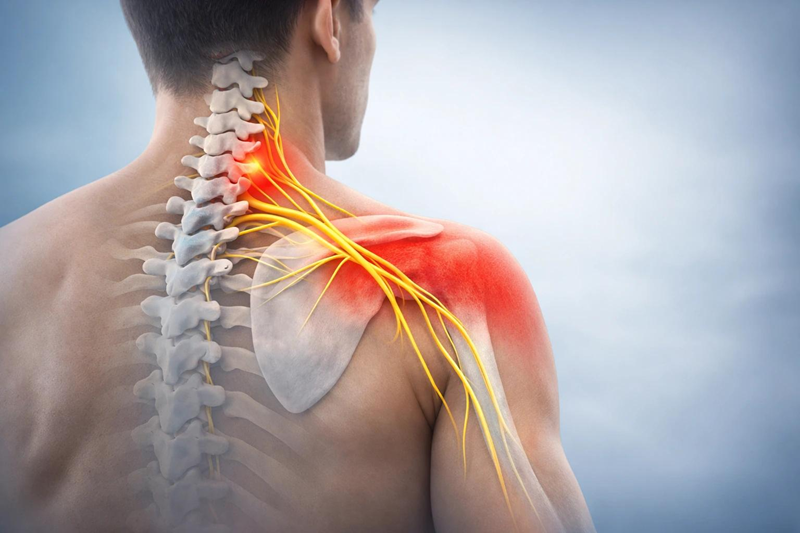
Neck joint problems, nerve irritation, and cervical spine conditions can produce referred pain around the shoulder blade. Tingling, numbness, or weakness may also occur when nerves are involved.
Frozen shoulder, or adhesive capsulitis, causes pain and progressive restriction of shoulder movement. Changes in shoulder mechanics may also affect the surrounding muscles and shoulder blade.
Physiotherapy helps manage shoulder stiffness through carefully selected mobility exercises and manual techniques. Learn more about Frozen Shoulder Treatment in Dubai.
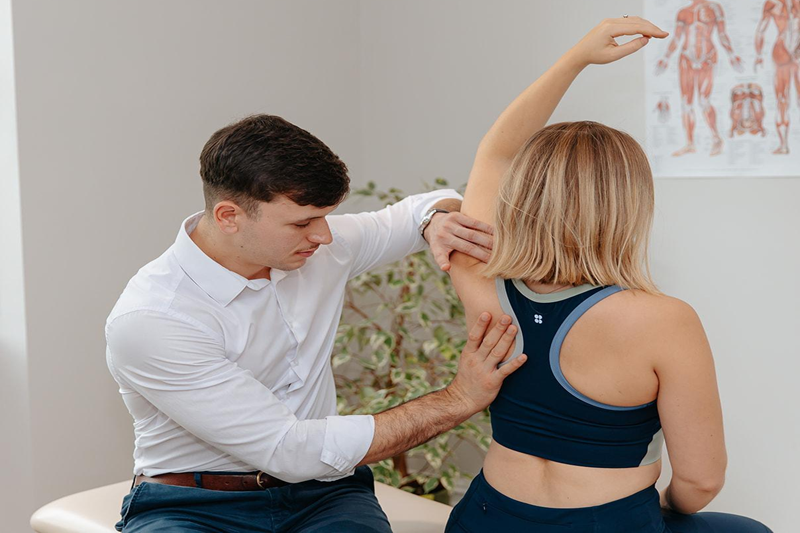
A physiotherapy assessment helps identify the structures contributing to shoulder blade pain and determine the most appropriate treatment.
The assessment may include:
If symptoms suggest a fracture, significant nerve involvement, or a condition outside the musculoskeletal system, further medical evaluation may be necessary.
Physiotherapy focuses on addressing the movement restrictions, muscle imbalances, and functional problems contributing to shoulder blade pain. Treatment is tailored to the assessment findings rather than applying the same techniques to every patient.
The following techniques may be included in a rehabilitation programme:
| Physiotherapy Technique | Purpose |
|---|---|
| Manual therapy | Addresses soft tissue tension and restricted joint movement |
| Scapular stabilisation exercises | Improves shoulder blade control and muscular coordination |
| Stretching exercises | Targets tight muscles around the shoulder and upper back |
| Strengthening exercises | Improves rotator cuff and scapular muscle function |
| Postural correction | Reduces unnecessary strain during daily activities |
| Mobility training | Restores comfortable shoulder and upper-back movement |
Manual therapy involves hands-on techniques such as soft tissue mobilisation and joint mobilisation. These techniques target restricted movement and excessive muscle tension around the shoulder blade, shoulder joint, and upper back.
They can also help patients move more comfortably and prepare them for active rehabilitation exercises.
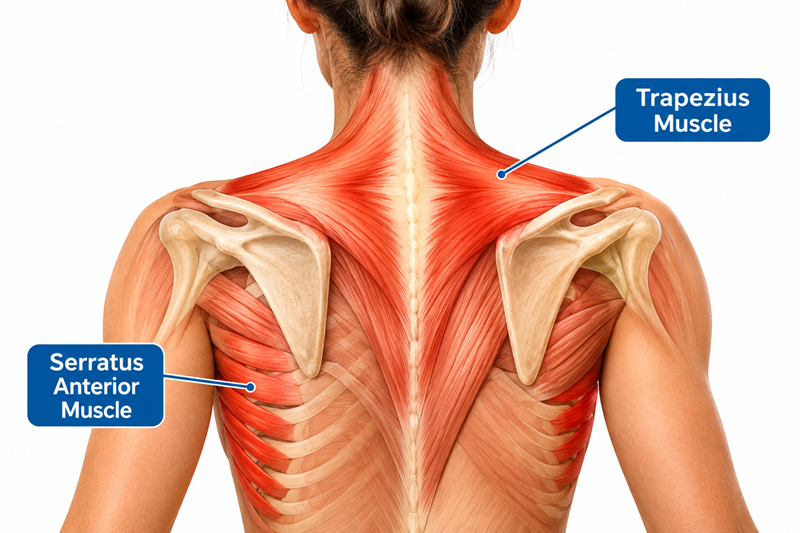
These exercises target muscles responsible for controlling shoulder blade movement, particularly the serratus anterior and middle and lower trapezius.
Exercises such as wall slides, scapular retractions, and prone Y raises help improve muscular coordination and shoulder stability.
A physiotherapist adjusts resistance and repetitions according to the patient’s strength and movement control.
Stretching targets tight muscles such as the pectoralis minor, upper trapezius, and levator scapulae. Strengthening exercises focus on the rhomboids, rotator cuff, and other scapular stabilisers.
Resistance bands, light weights, and controlled bodyweight movements may be used to improve muscle function and support shoulder movement.
Patients learn how to maintain comfortable shoulder positioning during desk work, lifting, and other daily activities.
Thoracic mobility exercises and controlled shoulder movements may also be included when stiffness limits normal function.
Together, these techniques help improve movement quality and reduce excessive loading on the shoulder and upper-back muscles.

A structured physiotherapy programme offers several benefits when pain is associated with musculoskeletal problems:
The results depend on the underlying condition, treatment consistency, and individual response to rehabilitation.
Persistent or worsening pain under the shoulder blade should be assessed by a healthcare professional, particularly when it affects daily activities.
Seek prompt medical assessment if you experience severe pain, significant arm weakness, persistent numbness, major swelling, or symptoms following an injury.
Seek emergency medical attention if shoulder blade pain occurs with chest pressure, shortness of breath, sweating, or dizziness, as these symptoms may indicate a serious medical condition.
For additional guidance, see the NHS guide to shoulder pain.
Need Help With Pain or Recovery?
Get a personalized treatment plan from our senior physiotherapists at PhysioCare Dubai Healthcare City.
Book online or message us on WhatsApp.
Common causes include muscle strain, poor posture, scapular movement problems, rotator cuff conditions, and cervical spine disorders. A clinical assessment helps identify the source.
Yes. Physiotherapy can address muscle weakness, restricted mobility, and altered shoulder blade movement through manual therapy, strengthening, stretching, and movement training.
Recovery depends on the underlying condition and its severity. Mild muscle-related discomfort may improve sooner, while persistent shoulder conditions may require several weeks or longer of rehabilitation.
Gentle movement may be appropriate, but exercises should match the underlying condition and pain level. A physiotherapist can recommend suitable movements and adjust exercise intensity.
Shoulder pain under the scapula can result from muscle strain, poor posture, altered scapular movement, or shoulder and neck conditions. Identifying the cause is essential for effective treatment.
Physiotherapy addresses these problems through manual therapy, scapular stabilisation, targeted strengthening, stretching, and mobility training. A personalised rehabilitation programme helps improve shoulder function, manage discomfort, and support a gradual return to everyday activities.
Prefer Physiocare.ae in Google — add us as a preferred source so our physiotherapy guides show first for you in Top Stories.

Christine Joyce Juatas
DHA-Licensed Physiotherapist
Manage nerve pain after back surgery: how long it may last, when physiotherapy helps, and which symptoms need urgent medical care.
Sciatica causes leg pain, numbness, or weakness. Learn causes, symptoms, treatment options, and effective ways to find lasting relief.

Leave a Comment