
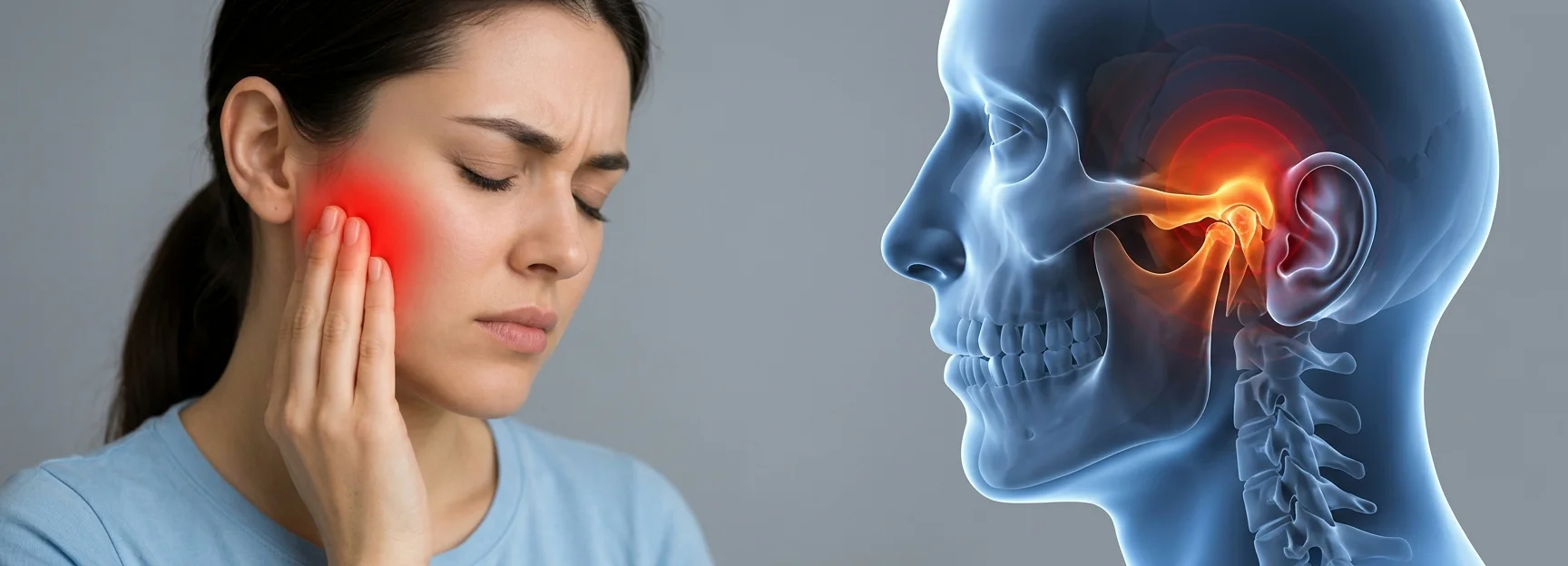
TMJ Disorder Care in Dubai
Relieve Jaw Pain, Clicking & Locked Jaw Issues
Temporomandibular joint (TMJ) disorders affect the joint that connects the jaw to the skull. They can cause jaw pain, clicking or popping sounds, difficulty opening the mouth, headaches, and neck stiffness. These symptoms may make everyday activities such as chewing, speaking, and yawning uncomfortable.
At Physio Care, TMJ Treatment in Dubai focuses on managing jaw discomfort, releasing tight chewing muscles, and improving jaw movement. Treatment is tailored to your symptoms, jaw mobility, and individual needs. Depending on your assessment, physiotherapy may include intra-oral manual therapy, gentle joint mobilization, dry needling, and posture retraining.
Common Symptoms of TMJ Disorders
TMJ disorders can affect jaw movement and cause discomfort around the face, head, and neck. Common symptoms include:
Jaw Pain and Tenderness
Pain around the jaw joint or chewing muscles may become more noticeable when eating, speaking, or opening the mouth. The discomfort can affect one or both sides of the jaw.
Clicking or Popping Sounds
Some people notice clicking or popping sounds when opening or closing their mouths. These sounds may occur with or without pain. Persistent clicking accompanied by pain or restricted movement should be assessed by a qualified healthcare professional.
Limited Jaw Movement
Jaw stiffness or a feeling that the jaw is locking can make it difficult to open the mouth fully or move it from side to side. This may interfere with eating and other daily activities.
Headaches and Neck Stiffness
TMJ disorders may occur alongside headaches, tight chewing muscles, and neck discomfort. An assessment can help determine whether jaw movement, muscle tension, or neck posture may be contributing to these symptoms.
Temporomandibular Joint Treatment in Dubai at Physio Care
Physio Care offers specialized TMJ physiotherapy focused on releasing tight chewing muscles, improving jaw mobility, and addressing related posture concerns. The treatment approach is selected according to your symptoms and clinical assessment. Temporo Mandibular Joint Treatment In Dubai at Physio Care may involve the following techniques.
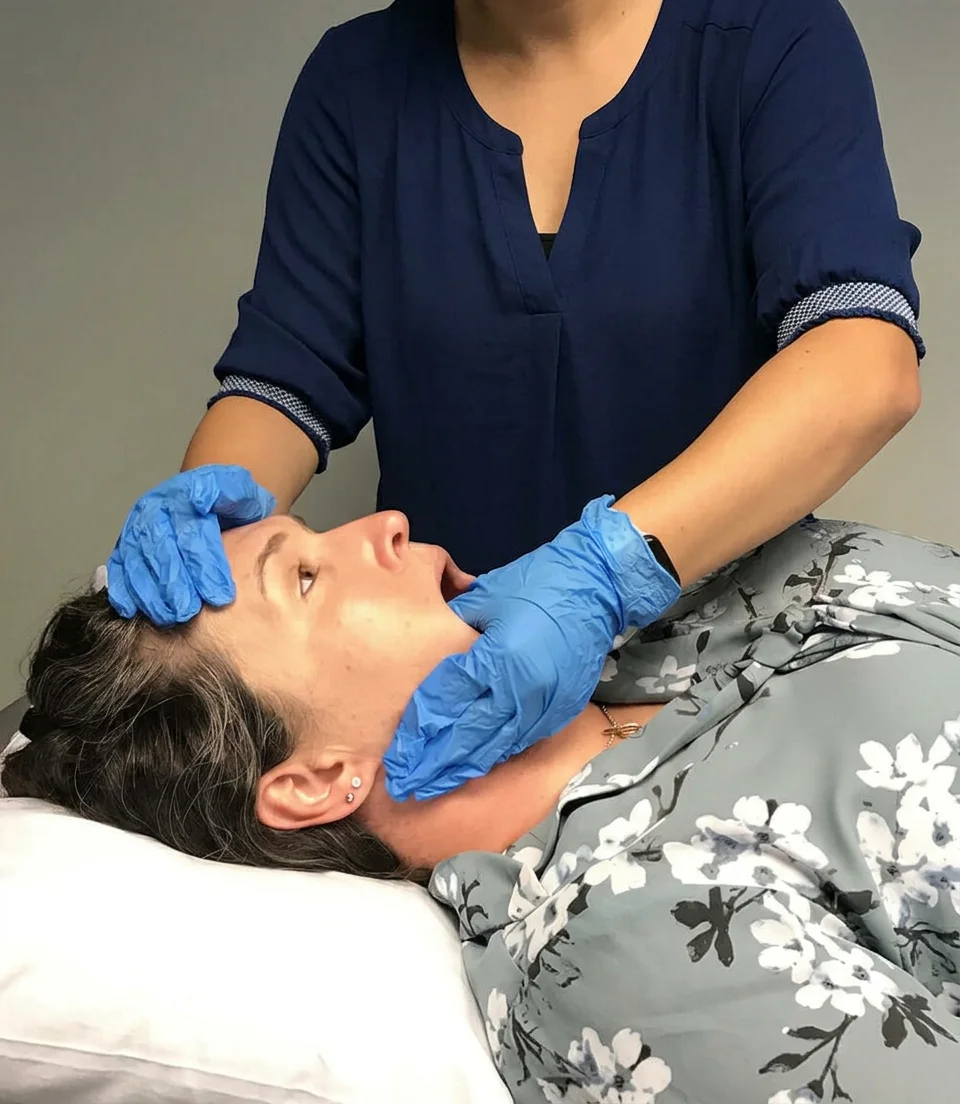
Intra-Oral Manual Therapy
Intra-oral manual therapy involves hands-on techniques applied inside the mouth to target tight or spasmed chewing muscles, such as the masseter. When appropriate, this approach may help reduce muscle tension and improve comfort during jaw movement.
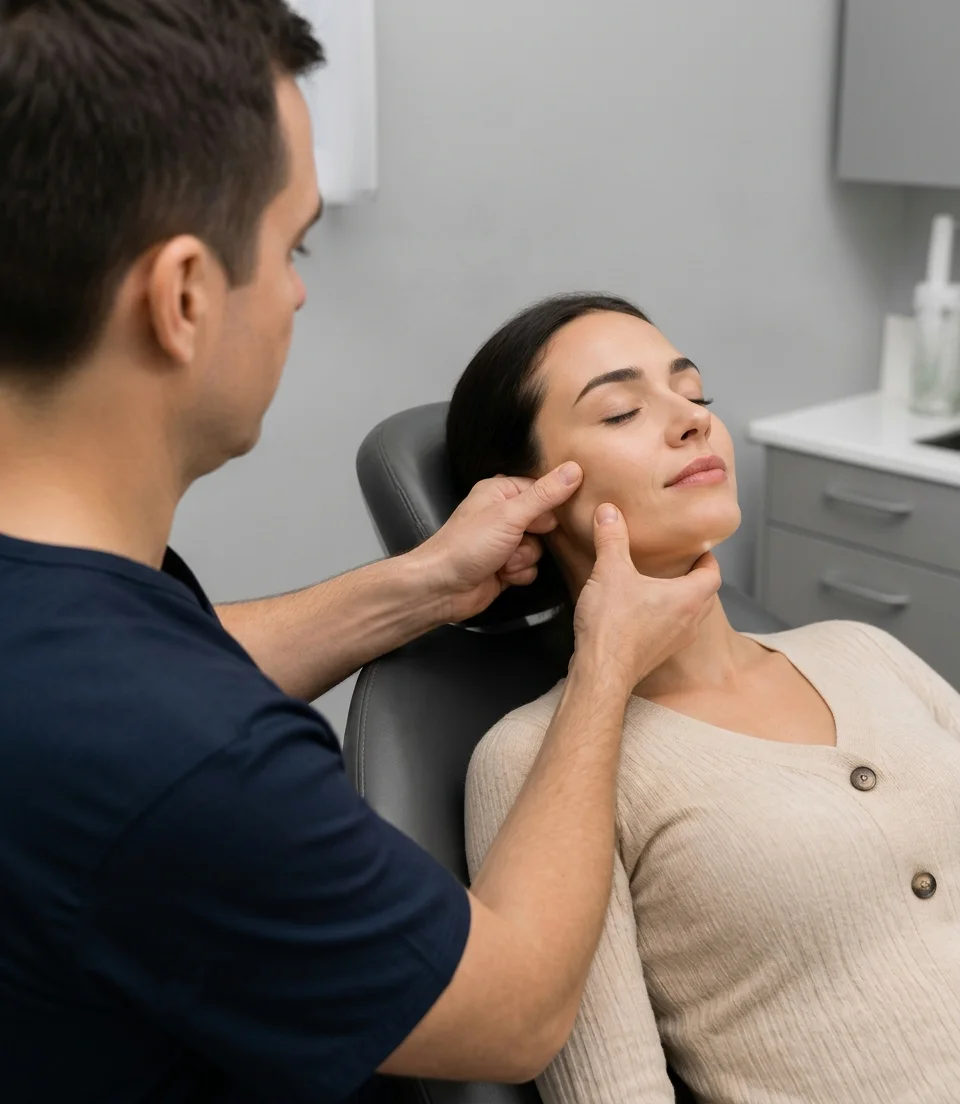
TMJ Joint Mobilization
Gentle joint mobilization targets restricted movement in the temporomandibular joint. The physiotherapist selects appropriate techniques to help improve jaw opening and side-to-side movement based on your assessment and comfort.
Dry Needling
Dry needling may be used to target selected muscle trigger points associated with jaw tension and discomfort. It involves thin, sterile needles and should only be performed by a suitably trained professional when clinically appropriate.
Posture Retraining
Neck posture and upper cervical alignment may contribute to discomfort in some people with TMJ disorders. Posture retraining helps address relevant positioning and movement habits that may be affecting the jaw and neck.
Guidance on Stress and Jaw Clenching
Stress and habitual jaw clenching can increase tension in the chewing muscles. Physio Care also provides guidance on stress reduction and avoiding clenching as part of its TMJ treatment approach.
What Happens During TMJ Physiotherapy?
Your first appointment helps the physiotherapist understand your symptoms and determine which treatments may be suitable.
Your assessment may include:
- Reviewing your symptoms, medical history, and daily activities.
- Assessing jaw opening, closing, and side-to-side movement.
- Checking the chewing muscles for tightness or tenderness.
- Observing neck posture and related movement patterns.
- Identifying activities that increase discomfort, such as chewing or yawning.
Based on the findings, your physiotherapist will discuss an individualized treatment plan. The plan may be adjusted as your symptoms and jaw function change.
How Can Physiotherapy Help With TMJ Disorders?
Depending on the cause of your symptoms, physiotherapy may help to:
- Manage jaw pain and muscle tension.
- Improve comfortable mouth opening and jaw movement.
- Address restricted side-to-side jaw movement.
- Reduce related neck discomfort and muscle tightness.
- Improve awareness of jaw clenching and posture habits.
Results vary according to the underlying cause, symptom severity, and individual response to treatment. Physiotherapy may be part of your care plan, but it does not replace dental or medical assessment when needed.
Who Should Consider TMJ Treatment in Dubai?
You may benefit from an assessment if jaw discomfort, stiffness, clicking with pain, or restricted movement is affecting your daily activities. People who experience recurring headaches alongside jaw symptoms may also benefit from an evaluation.
However, not all jaw pain is caused by a TMJ disorder. Dental problems, injuries, and other medical conditions can cause similar symptoms. A dentist or physician may be needed to identify the cause, particularly when symptoms are new, severe, or persistent.
Physio Care can assess whether physiotherapy is appropriate for your symptoms and recommend a suitable rehabilitation approach.
Book TMJ Treatment in Dubai at Physio Care
If jaw pain, stiffness, or limited movement is affecting your daily life, a professional assessment can help you understand your treatment options. Physio Care provides individualized TMJ physiotherapy focused on jaw mobility, muscle tension, and related movement concerns.
Contact Physio Care to arrange an assessment and discuss a treatment plan suited to your symptoms and goals.
Frequently Asked Questions
Experience professional physiotherapy care in a comfortable environment.
Book Your Session
Schedule an assessment to see if TMJ Disorder Care in Dubai is right for your condition.
Book Appointment WhatsApp Consultation Call Us Now