

Frozen Shoulder Treatments in Dubai
Reduce Pain. Improve Mobility. Restore Function. Return to Daily Activities.

Physiotherapy for Frozen Shoulder & Adhesive Capsulitis
Frozen shoulder can make simple everyday movements painful, restricted and frustrating. Reaching overhead, getting dressed, reaching behind your back or sleeping comfortably can become increasingly difficult as shoulder pain and stiffness develop.
At PhysioCare, our frozen shoulder physiotherapy approach focuses on managing pain, improving shoulder mobility, restoring function and helping you return to your everyday activities. Your treatment plan is individualized according to your symptoms, pain level, shoulder movement, functional limitations and stage of frozen shoulder.
Reduce Pain. Improve Mobility. Restore Function. Return to Daily Activities.
What Is Frozen Shoulder?
Frozen shoulder, also known as adhesive capsulitis, is a condition associated with shoulder pain, stiffness and a significant restriction in shoulder movement.
The capsule surrounding the shoulder joint can become inflamed, tight and less flexible, making normal shoulder movements increasingly difficult.
Frozen shoulder may affect your ability to:
- Raise your arm overhead
- Reach behind your back
- Put on or remove clothing
- Reach for objects on a high shelf
- Wash or groom your hair
- Sleep comfortably
- Perform work or household activities
- Use your arm normally during everyday tasks
The condition often develops gradually, and the combination of pain and stiffness can change over time. The severity and duration can vary from person to person.
Take the Next Step Toward Better Shoulder Movement
Shoulder pain limiting your movement? PhysioCare's frozen shoulder care is tailored to you — with manual therapy, stretching, and progressive strengthening.
Book a Frozen Shoulder Physiotherapy Consultation in Dubai.

Frozen Shoulder Symptoms
Frozen shoulder commonly involves shoulder pain and restricted movement, although symptoms can change as the condition progresses.
If shoulder pain or stiffness is affecting your daily activities, a physiotherapy assessment can help identify your movement limitations and determine an appropriate treatment approach.
Shoulder Pain
Pain may develop gradually and can become more noticeable when moving the shoulder. Some people also experience increased discomfort at night, which may interfere with sleep.
Increasing Shoulder Stiffness
As the condition progresses, the shoulder can become increasingly difficult to move. Rotational movements may be particularly restricted, including reaching behind your back or placing your hand behind your head.
Reduced Range of Motion
You may notice that movements that were previously easy are becoming more difficult, particularly lifting, reaching and rotating your arm.
Difficulty With Everyday Activities
Shoulder stiffness can make routine activities more challenging, including dressing, grooming, reaching for objects and performing household or work-related tasks.
The Stages of Frozen Shoulder
Frozen shoulder is commonly described in three stages. The stages can overlap, and their duration can vary between individuals.
01. Freezing Stage
During the freezing stage, shoulder pain gradually increases while movement begins to become more restricted. Pain may also be more noticeable at night.
Physiotherapy Focus
Treatment may focus on:
- Managing pain and discomfort
- Maintaining comfortable shoulder movement
- Preserving available range of motion
- Avoiding unnecessary aggravation of symptoms
02. Frozen Stage
During the frozen stage, pain may become less prominent for some people, while shoulder stiffness and restricted movement become the main concerns.
Physiotherapy Focus
Treatment may include:
- Mobility exercises
- Stretching
- Manual therapy
- Joint mobilization
- Range-of-motion exercises
The specific approach depends on your symptoms and tolerance.
03. Thawing Stage
During the thawing stage, shoulder movement gradually begins to improve and everyday activities may become easier.
Physiotherapy Focus
Treatment can progress toward:
- Improving shoulder mobility
- Restoring functional movement
- Building shoulder strength
- Supporting a gradual return to everyday activities
Because frozen shoulder does not progress in exactly the same way for everyone, your physiotherapy program can be adjusted as your pain, stiffness and movement change.
Our Physiotherapy Approach for Frozen Shoulder
At PhysioCare, treatment is individualized according to your shoulder symptoms, movement limitations, pain level and treatment goals.
Depending on your assessment, your physiotherapy program may incorporate a combination of pain-management techniques, hands-on treatment, therapeutic modalities and progressive exercises.

01. Superficial Heat — Infrared Therapy
Superficial heat may be used to provide soothing warmth, help relax the shoulder and prepare the area for treatment and exercise.
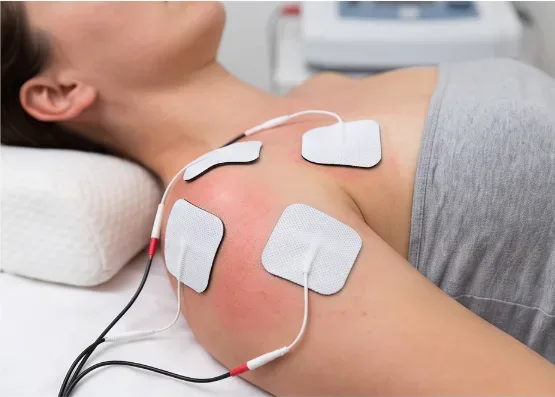
02. IFT — Interferential Therapy
Interferential Therapy may be used as part of pain management to help reduce discomfort and support the rehabilitation process.
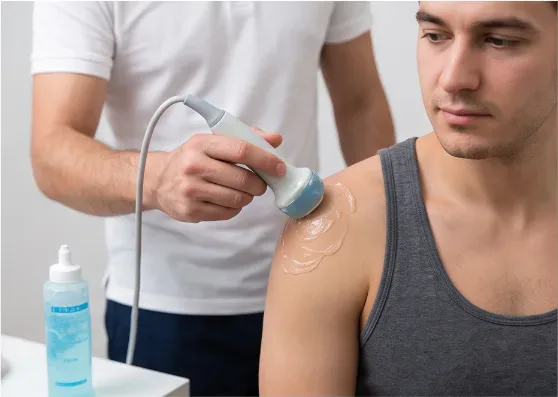
03. Therapeutic Ultrasound
Therapeutic ultrasound may be incorporated into the treatment plan when clinically appropriate, as part of a broader physiotherapy approach for managing stiffness and supporting shoulder mobility.
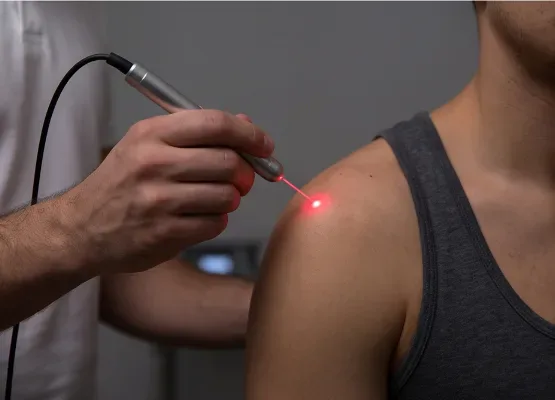
04. Laser Therapy — LLLT
Low-Level Laser Therapy may be incorporated when appropriate to support pain management and the overall physiotherapy treatment process.

05. Manual Therapy & Joint Mobilization
Gentle, specialized manual techniques and joint mobilization may be used to address shoulder stiffness, improve joint mobility and support more comfortable movement.
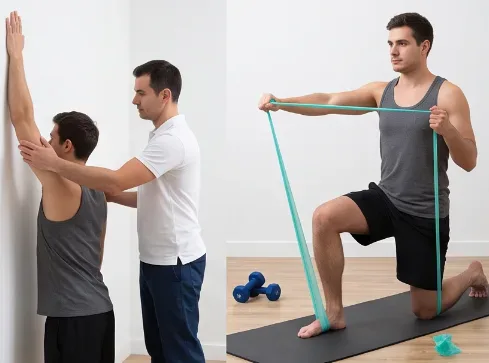
06. Stretching, Range of Motion & Strengthening Exercises
Exercise is an important part of frozen shoulder rehabilitation. Your program may include:
- Gentle range-of-motion exercises
- Shoulder stretching
- Assisted movement exercises
- Progressive strengthening
- Functional shoulder exercises
Exercises are selected according to your current mobility, symptoms and tolerance rather than using exactly the same program for every patient.
Our Goal
The goal of your frozen shoulder physiotherapy program is to help you work toward:
- Reducing shoulder pain and inflammation
- Increasing shoulder range of motion
- Improving shoulder strength and function
- Preventing or reducing long-term stiffness
- Making everyday activities easier
- Supporting a gradual return to a more comfortable and active lifestyle
Your Recovery. Our Commitment.
How Physiotherapy Helps Frozen Shoulder
Physiotherapy can address different aspects of frozen shoulder depending on your symptoms and stage of the condition.
Pain Management
Pain-management techniques may be used to help you move more comfortably and participate in your rehabilitation program.
Improving Mobility
Stretching, range-of-motion exercises, manual therapy and joint mobilization may be used to gradually work on restricted shoulder movement.
Restoring Function
As your mobility improves, treatment can progress toward functional movement and strengthening to help you use your shoulder more comfortably.
Progressive Exercise
Your exercise program can be adjusted over time according to your pain, mobility and response to treatment.
Home Exercise Guidance
Your physiotherapist may provide specific exercises to continue working on shoulder mobility and function between appointments.
Your Frozen Shoulder Treatment Plan at PhysioCare
Your treatment is not based on a fixed protocol. Your physiotherapy program can change as your shoulder responds to treatment.
01. Assessment
Your physiotherapist evaluates your:
- Shoulder movement
- Pain level
- Stiffness
- Range of motion
- Functional limitations
- Ability to perform everyday activities
This assessment helps determine the most appropriate treatment approach.
02. Individualized Treatment
Your treatment plan is developed according to your symptoms, shoulder mobility, pain level and stage of frozen shoulder.
03. Pain Management & Mobility
Depending on your needs, treatment may include pain-management techniques, manual therapy, joint mobilization, stretching and range-of-motion exercises.
04. Progressive Strengthening
As pain and mobility improve, strengthening exercises can gradually be introduced to help restore shoulder function.
05. Functional Recovery
Treatment progresses toward helping you use your shoulder more comfortably during everyday activities, work and household tasks.
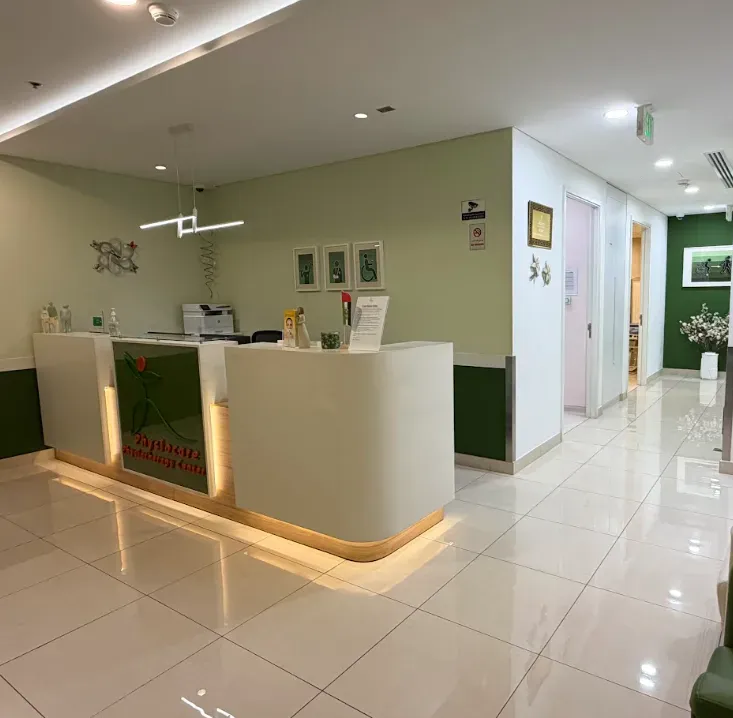
Why Choose PhysioCare for Frozen Shoulder Treatment in Dubai?
At PhysioCare, frozen shoulder physiotherapy is approached according to your individual symptoms and movement limitations rather than through a one-size-fits-all protocol.
Your treatment may include:
- Individual assessment of shoulder pain and mobility
- Treatment adapted to your stage of frozen shoulder
- Manual therapy and joint mobilization when appropriate
- Therapeutic exercise and progressive strengthening
- Pain-management techniques when indicated
- Guidance for suitable exercises between appointments
- A gradual approach to restoring everyday shoulder function
Who Can Benefit From Frozen Shoulder Physiotherapy?
Frozen shoulder physiotherapy in Dubai may be appropriate if shoulder pain and stiffness are affecting your movement, sleep or everyday activities.
You may benefit from a physiotherapy assessment if you experience:
- Persistent shoulder pain
- Increasing shoulder stiffness
- Reduced shoulder range of motion
- Difficulty raising your arm
- Difficulty reaching behind your back
- Pain or discomfort that affects sleep
- Difficulty dressing
- Difficulty grooming or washing your hair
- Difficulty performing household activities
- Reduced ability to use your arm normally
Shoulder stiffness can also occur with other conditions. An appropriate assessment is therefore important to understand whether your symptoms are consistent with frozen shoulder or another shoulder problem.
What to Expect During Frozen Shoulder Physiotherapy
Before Treatment
Your physiotherapist will assess your symptoms, shoulder movement, pain, stiffness and functional limitations. This helps determine which treatment techniques and exercises are appropriate for your current condition.
During Treatment
Depending on your individual needs, treatment may involve:
- Manual therapy
- Joint mobilization
- Superficial heat
- IFT
- Therapeutic ultrasound
- Laser therapy
- Stretching
- Range-of-motion exercises
- Progressive strengthening
Not every technique is necessary for every patient. Your treatment is adjusted according to your symptoms and response.
Between Sessions
You may be given specific home exercises based on your current range of motion and tolerance. Following your recommended exercise plan can help you continue working on shoulder mobility between appointments.
Over Time
Your treatment can be adjusted as your pain, stiffness and movement change. The overall aim is to gradually improve useful shoulder movement, restore function and help you return to everyday activities.
Take the Next Step Toward Better Shoulder Movement
Shoulder pain limiting your movement? PhysioCare's frozen shoulder care is tailored to you — with manual therapy, stretching, and progressive strengthening.
Book a Frozen Shoulder Physiotherapy Consultation in Dubai.
Frozen Shoulder Treatment in Dubai — Frequently Asked Questions
Experience professional physiotherapy care in a comfortable environment.
Book Your Session
Schedule an assessment to see if Frozen Shoulder Treatments in Dubai is right for your condition.
Book Appointment WhatsApp Consultation Call Us Now