

Heel Spur Treatment in Dubai
Personalized physiotherapy in Dubai to reduce discomfort and improve foot mobility.
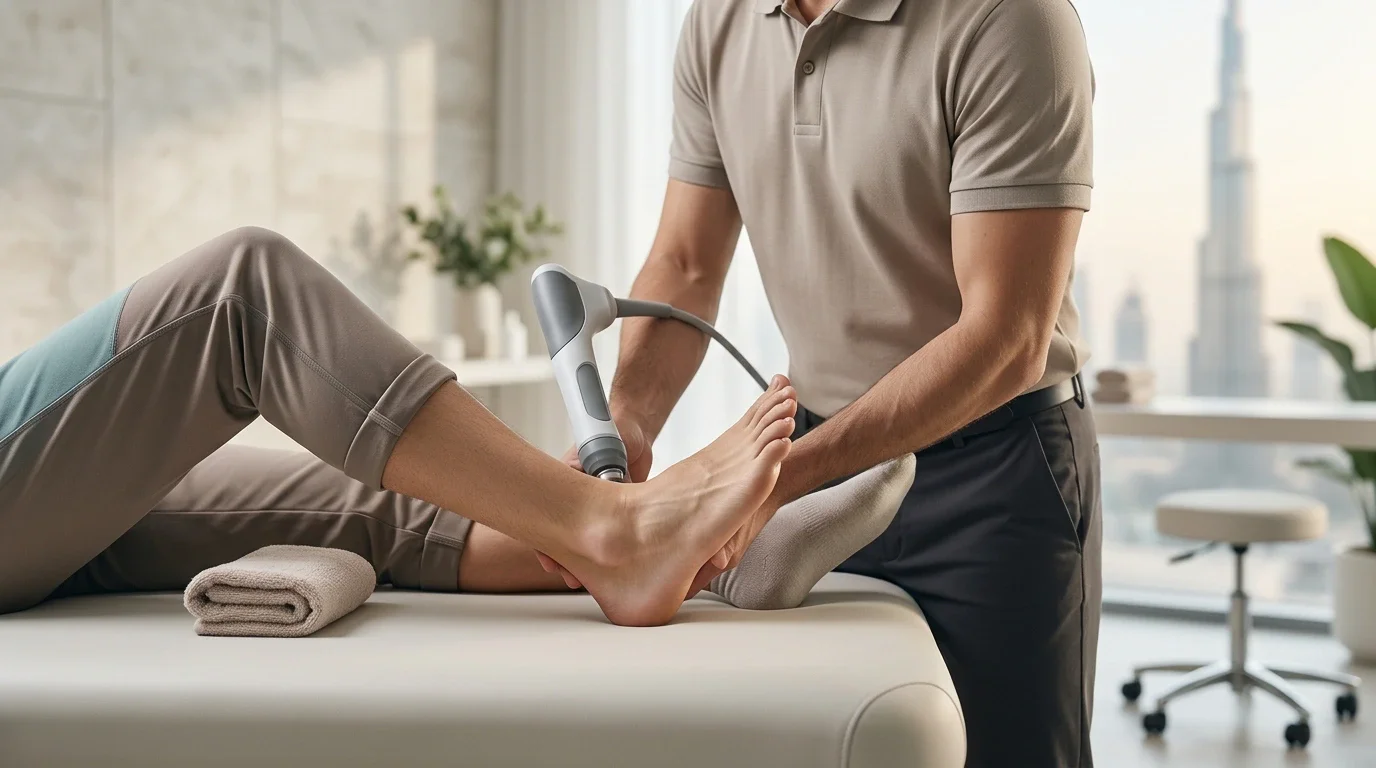
Heel pain can make walking, standing, and even your first steps in the morning uncomfortable. While a heel spur may appear on an X-ray, the pain often comes from surrounding tissues rather than the bony growth itself.
At Physiocare, we provide personalized heel spur treatment in Dubai through physiotherapy focused on relieving pain, improving foot mobility, and helping you return to everyday activities.
What Is a Heel Spur?
A heel spur is a bony growth that develops on the heel bone (calcaneus), often where the plantar fascia or Achilles tendon attaches. It can form gradually and may be associated with long-term stress on these tissues.
There are two common locations:
Not everyone with a heel spur experiences pain. In many cases, discomfort is related to conditions affecting the surrounding tissues, such as plantar fasciitis or insertional Achilles tendinopathy.
Identifying the actual source of pain is essential for choosing the right treatment.
Plantar Heel Spur
Develops underneath the heel and is often associated with plantar fasciitis.
Posterior Heel Spur
Forms at the back of the heel, near the Achilles tendon attachment.
What Causes Heel Spurs?
Heel spurs can develop over time in association with repeated mechanical stress and changes around tendon or ligament attachments.
Several factors may contribute to heel spur formation or related heel pain:
- Repetitive running, jumping, or high-impact activities
- Prolonged standing or walking
- Reduced ankle flexibility
- Excessive or sudden increases in physical activity
- Footwear that provides insufficient support
- Increased body weight and loading on the feet
- Age-related changes in connective tissues
These factors do not necessarily mean a heel spur will develop. Likewise, having a bone spur does not automatically mean it is responsible for your symptoms.
Book a Consultation
Heel spur pain affecting your walking or standing? Physiocare offers personalized physiotherapy in Dubai to reduce discomfort and improve foot mobility.
Book your heel spur physiotherapy consultation today.

Common Symptoms of Heel Spur-Related Pain
Sharp pain beneath the heel during the first steps in the morning
Discomfort after sitting or resting for an extended period
Heel pain during prolonged walking or standing
Tenderness underneath or behind the heel
Stiffness around the foot or ankle
Pain that worsens after running or other demanding activities
A heel spur may cause no symptoms at all. When heel pain is present, its pattern often provides clues about the underlying condition.
Pain underneath the heel, particularly after rest, is commonly associated with plantar fasciitis. Pain at the back of the heel may involve the Achilles tendon.
A physiotherapy assessment helps determine which structures are contributing to your symptoms.
How Is Heel Spur Pain Diagnosed?
A heel spur can be identified on an X-ray, but imaging findings alone do not establish the cause of heel pain.
During your assessment, your physiotherapist evaluates the location and pattern of your pain, foot and ankle mobility, muscle strength, walking mechanics, and daily activities.
Your assessment may include:
- Examination of painful or tender areas
- Ankle mobility and calf flexibility testing
- Foot and lower-limb strength assessment
- Walking and movement analysis
- Review of previous injuries and activity levels
If symptoms suggest a fracture, nerve problem, or another condition requiring medical investigation, further evaluation may be recommended.

Heel Spur Treatment at Physiocare
Most heel pain associated with a heel spur can initially be managed without surgery. Physiotherapy focuses on the underlying source of discomfort and the factors that place excessive stress on the heel.
Depending on each patient's condition, we provide selected treatments as part of a one-hour therapy package. After assessment, your physiotherapist decides which treatments to include and how many sessions may be needed, then adjusts the plan as your symptoms and progress change.
Stretching Exercises
Targeted stretching of the plantar fascia and calf muscles can reduce pain and improve flexibility, particularly when plantar fasciitis contributes to heel discomfort. Your physiotherapist selects exercises based on your symptoms and the structures involved.
Strengthening Exercises
Progressive exercises strengthen the foot, ankle, and calf muscles, helping them tolerate the demands of walking, standing, and physical activity. The exercise program is adjusted as your strength and symptoms improve.
Manual Therapy
Hands-on techniques can address restrictions in foot and ankle mobility and help reduce pain associated with surrounding soft tissues. Manual therapy is typically combined with exercise rather than used as the only treatment.
Shockwave Therapy (ESWT)
Extracorporeal Shockwave Therapy is a non-invasive treatment that may be considered for persistent plantar heel pain, particularly when initial conservative treatments have not provided sufficient relief. It delivers acoustic waves to the affected area and may improve symptoms in selected patients. Shockwave therapy does not remove or break down the heel spur, and it is not necessary for every patient.
Footwear and Orthotic Guidance
Supportive footwear, heel cushioning, or suitable orthotic insoles can help redistribute pressure and improve comfort. Orthotic support is generally considered alongside exercises and other rehabilitation methods rather than as a standalone solution.
Activity Modification and Rehabilitation
Your physiotherapist helps identify activities that aggravate your symptoms and recommends practical adjustments. A personalized rehabilitation program supports a gradual return to walking, exercise, and other daily activities without unnecessary prolonged inactivity.
How Long Does Heel Spur Recovery Take?
Recovery depends on the underlying cause of pain, how long symptoms have been present, and how consistently rehabilitation is followed.
Some people experience noticeable improvement within several weeks. Persistent plantar heel pain may take several months to improve.
For plantar fasciitis, more than 90% of patients improve within 10 months of starting conservative treatment, according to the American Academy of Orthopaedic Surgeons.
These recovery estimates refer to symptom improvement, not the disappearance of the bony spur.
At Physiocare, your physiotherapist monitors your progress and adjusts your treatment plan according to your response.
Heel Spur vs. Ankle Spur: What's the Difference?
Both conditions involve a bone spur, but their locations and associated symptoms can differ.
A heel spur develops on the calcaneus, usually underneath or behind the heel. It may be associated with plantar fascia problems or Achilles tendon conditions.
An ankle spur develops around the ankle joint, where bony growths may be associated with joint degeneration, previous injuries, or repeated mechanical stress. Some ankle spurs can contribute to restricted movement or impingement.
Because these conditions can involve different structures, their treatment plans are not necessarily the same.
Physiotherapy can address pain, mobility restrictions, and functional limitations when conservative treatment is appropriate.
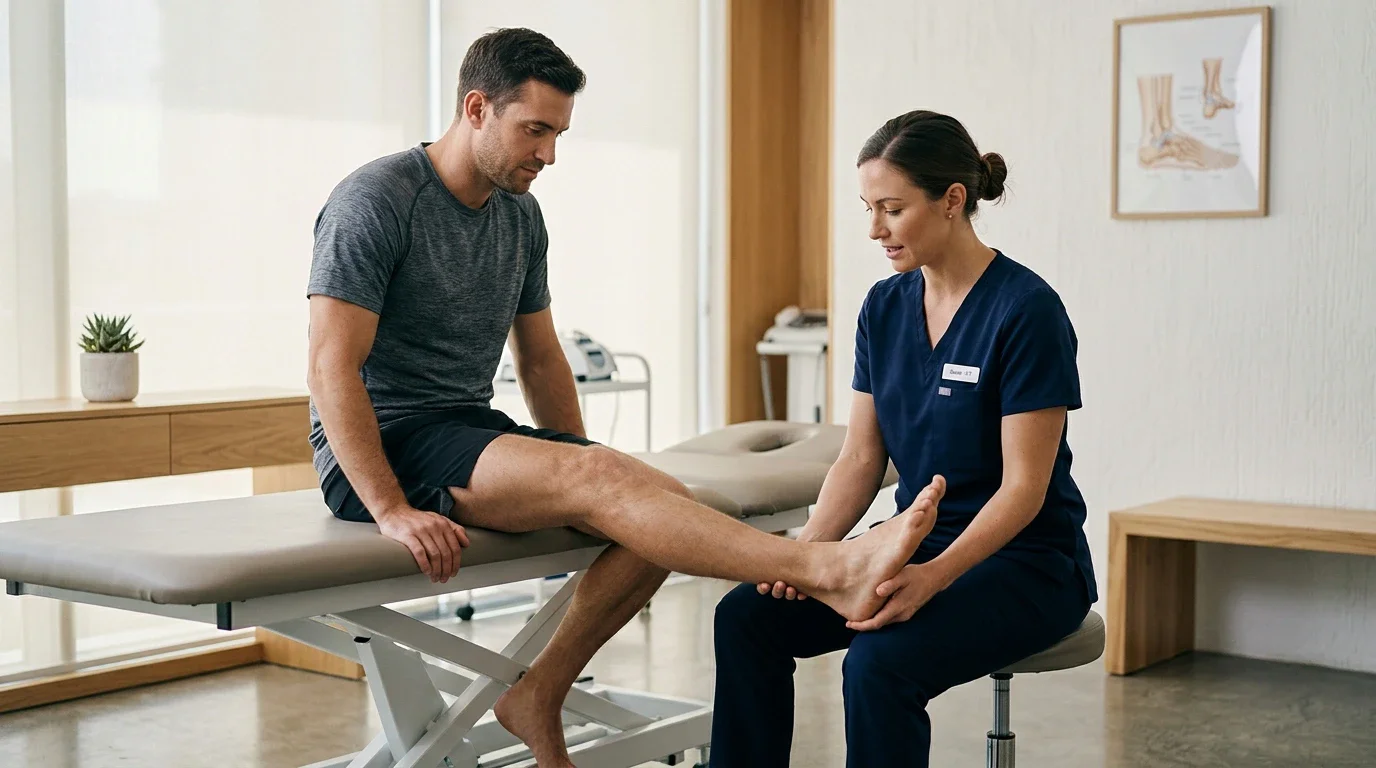
Can Physiotherapy Remove a Heel Spur?
No. Physiotherapy does not remove the bony growth.
However, removing the spur is often unnecessary because it may not be the source of pain.
Treatment instead addresses associated conditions, improves tissue loading, restores mobility, and strengthens the foot and ankle.
Surgery is generally considered only for selected patients with persistent symptoms that have not responded to an appropriate course of conservative treatment.
Why Choose Physiocare for Heel Spur Treatment in Dubai?
At Physiocare, we focus on identifying the factors contributing to your heel pain rather than treating an X-ray finding alone.
Our physiotherapy approach includes:
Our goal is to help you manage pain and improve long-term foot function through appropriate, individualized physiotherapy.
Individual Assessment
Understanding your symptoms, mobility, strength, and movement patterns.
Personalized Treatment
Selecting exercises and techniques according to your condition.
Functional Rehabilitation
Helping you walk, stand, and return to activities with greater comfort.
Progress Monitoring
Adjusting your rehabilitation program as your symptoms and physical abilities change.
When Should You Seek Treatment for Heel Pain?
Consider a professional assessment if heel pain continues to affect your daily activities, repeatedly returns after exercise, or makes walking and standing uncomfortable.
- Severe pain after an injury
- Inability to bear weight
- Marked swelling or redness
- Fever with foot pain
You should seek prompt medical assessment if you experience any of the warning signs above. Early identification of the underlying problem can help you choose the most appropriate treatment.
Book Your Heel Spur Physiotherapy Consultation
Persistent heel pain should not prevent you from enjoying everyday activities.
At Physiocare Dubai, our physiotherapists assess your symptoms and develop an individualized treatment plan focused on pain management, mobility, and functional recovery.
Frequently Asked Questions
Experience professional physiotherapy care in a comfortable environment.
Book Your Session
Schedule an assessment to see if Heel Spur Treatment in Dubai is right for your condition.
Book Appointment WhatsApp Consultation Call Us Now