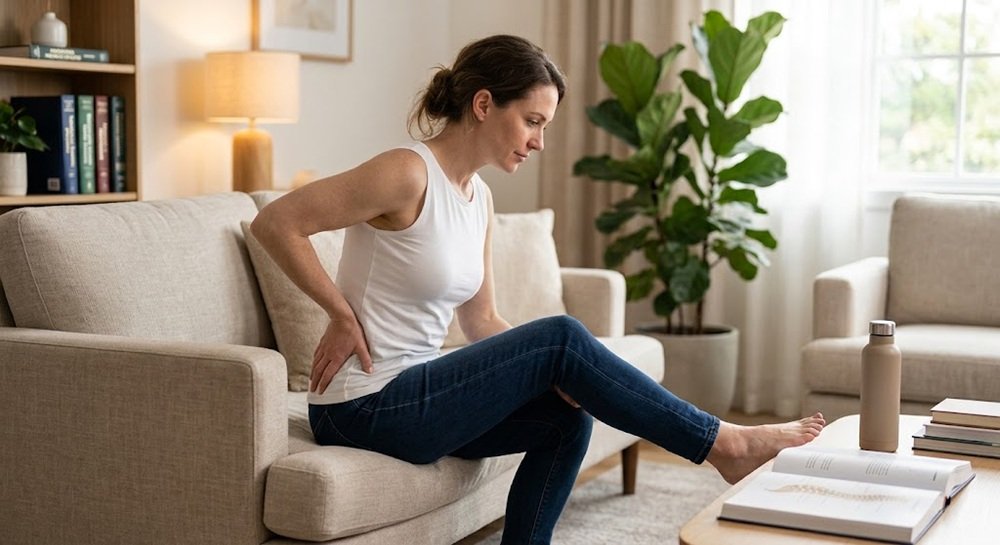
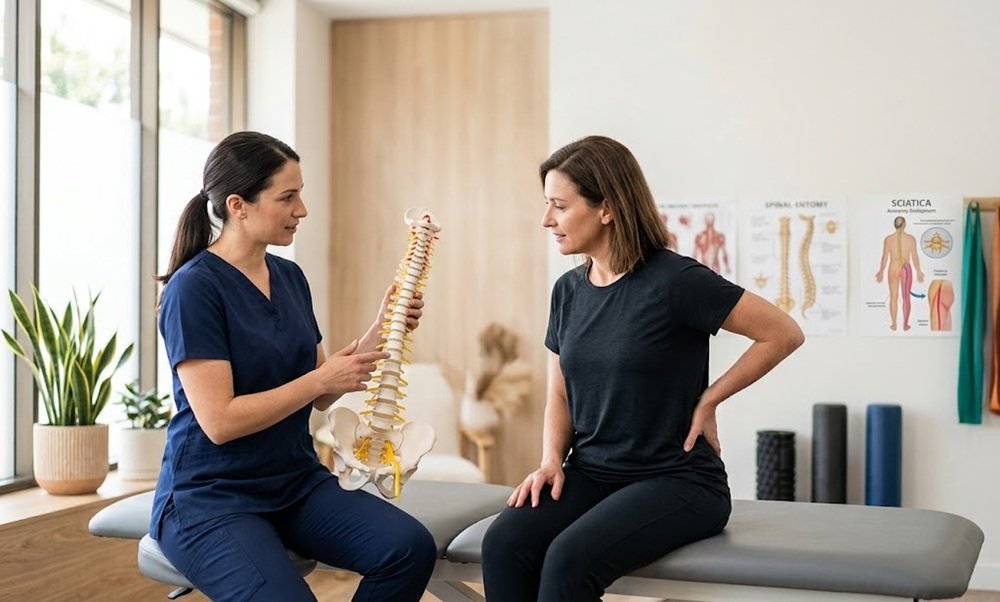
Sciatica is a type of nerve-related pain that occurs when a nerve root in the lower spine becomes irritated or compressed. The sciatic nerve is formed from several nerve roots in the lower back and travels through the buttocks and down the leg.
Sciatica usually affects one side of the body. Instead of causing pain only in the lower back, it can produce symptoms that travel from the lower back or buttock into the leg and sometimes as far as the foot or toes.
Common symptoms include sharp or burning pain, tingling, numbness, and weakness. Symptoms can develop suddenly or gradually and may become more noticeable with certain movements, coughing, or sneezing.
Although sciatica can be painful and disruptive, many cases improve with time and appropriate conservative treatment. Understanding the cause of your symptoms can help determine the most suitable approach to recovery.
Need Help With Pain or Recovery?
Get a personalized treatment plan from our senior physiotherapists at PhysioCare Dubai Healthcare City.
Book online or message us on WhatsApp.
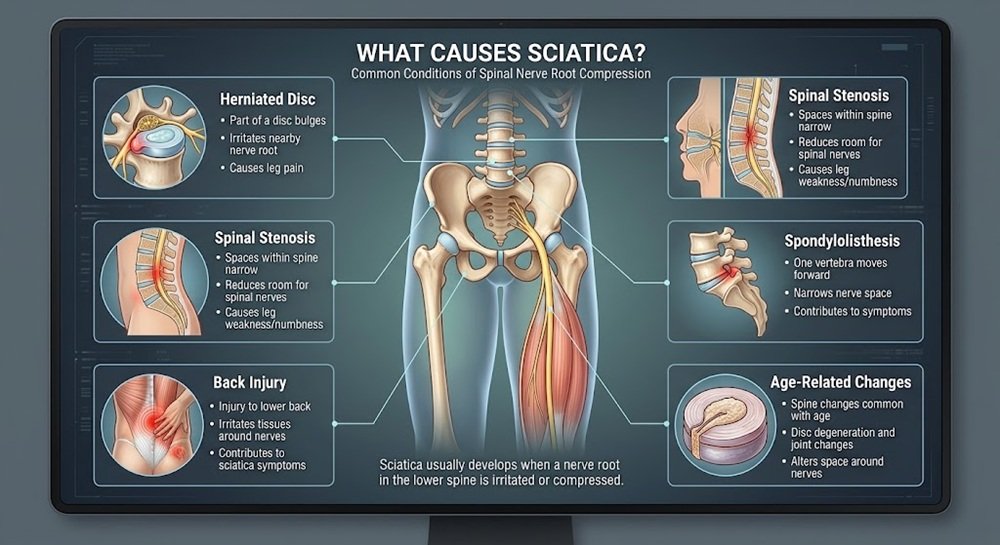
Sciatica usually develops when a nerve root in the lower spine becomes irritated or compressed. Several conditions can contribute to this.
A herniated disc is one of the most common causes of sciatica. The discs between the vertebrae act as cushions for the spine. If part of a disc bulges or herniates, it can irritate a nearby nerve root and cause pain or other symptoms along the leg.
Spinal stenosis occurs when the spaces within the spine become narrower. This can reduce the space available for spinal nerves and may lead to pain, numbness, or weakness in the legs.
Spondylolisthesis occurs when one vertebra moves forward or backward in relation to another. In some cases, this can narrow the space around a nerve and contribute to sciatic symptoms.
An injury affecting the lower back can irritate tissues around the spinal nerves. Depending on the injury, this may contribute to symptoms associated with sciatica.
Changes in the spine become more common with age. Disc degeneration and changes affecting the joints or other spinal structures can alter the space around the nerves and contribute to irritation or compression.
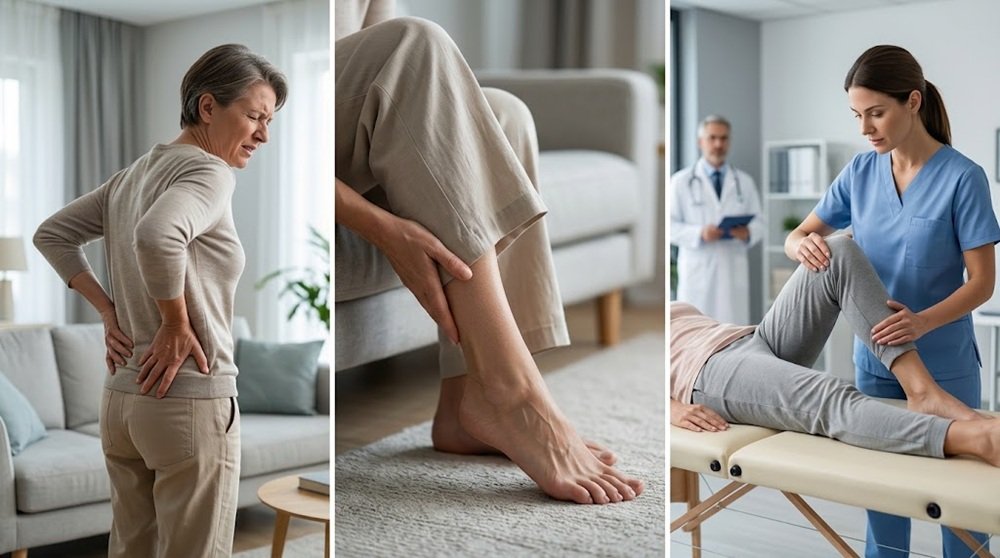
Sciatica symptoms can vary depending on the affected nerve root and the degree of irritation or compression.
Common symptoms include:
Sciatica usually affects one side of the body. You may also have lower back pain, although the leg pain can be more noticeable than the back pain.
Sciatica pain generally follows the path of the affected nerve. It may begin around the lower back or buttock and travel down the back or side of the thigh and lower leg.
Some people experience symptoms only in the buttock or thigh, while others may have symptoms extending toward the calf, foot, or toes.
The exact location depends on which nerve root is involved.
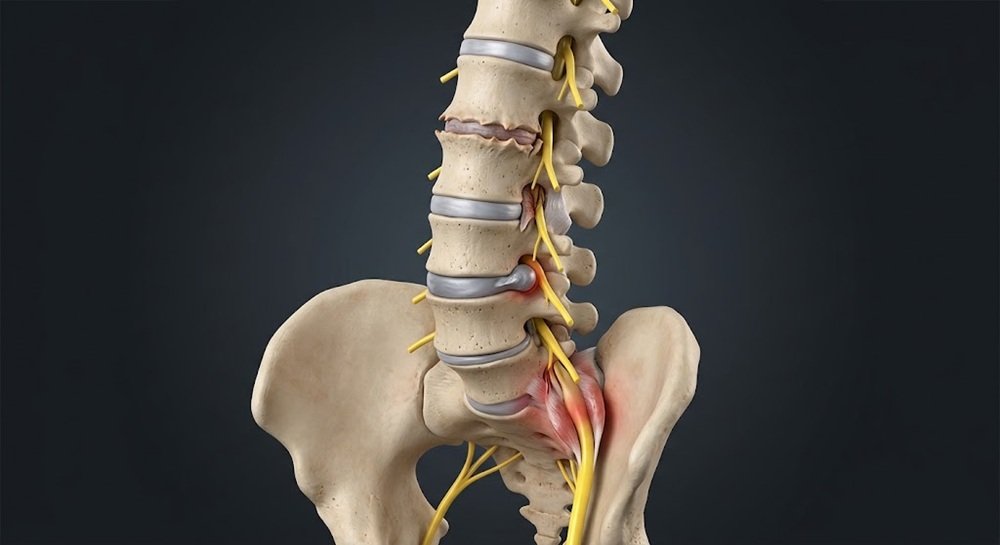
People can experience sciatica differently. The pain may feel:
Sharp or shooting
Burning
Electric or shock-like
Tingling
Numb
Accompanied by weakness
Symptoms may be constant or intermittent. Some people notice that particular positions or movements aggravate their symptoms, while others experience increased discomfort when coughing or sneezing.
A healthcare professional will usually diagnose sciatica based on your symptoms, medical history, and physical examination.
During an assessment, they may evaluate:
Imaging such as an MRI is not routinely required for everyone with sciatica. NICE recommends against routinely offering imaging in a non-specialist setting. Imaging may be considered in a specialist setting when the results are likely to change how the condition is managed.
This means that having sciatica does not automatically mean you need an MRI. Your symptoms and clinical assessment help determine whether further investigation is appropriate.
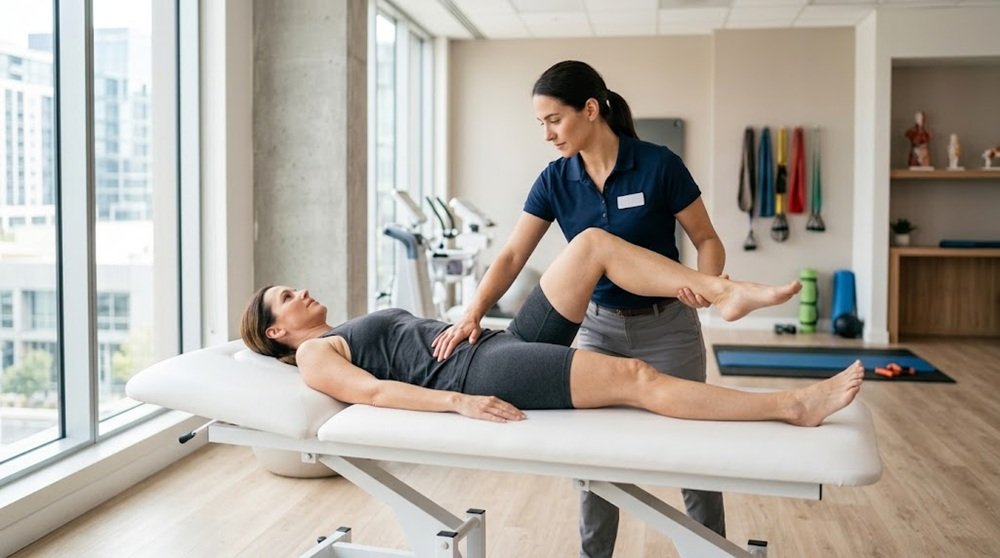
The right treatment for sciatica depends on its cause, severity, duration, and how it affects your daily activities. Some patients may also be candidates for spinal decompression.
For many people, treatment begins with conservative approaches such as staying active, exercise, education, and symptom management.
Physiotherapy can be an important part of sciatica management.
A physiotherapist can assess your symptoms, movement, strength, mobility, and functional limitations before developing an individualized treatment plan.
Depending on your assessment, treatment may include:
The goal is not simply to reduce pain temporarily. A structured rehabilitation programme can help you maintain movement, improve physical function, build confidence with activity, and gradually return to your usual routine.
NICE recommends exercise programmes for people with low back pain with or without sciatica and advises that manual therapy, when used, should be part of a treatment package that includes exercise.
Regular movement and appropriately selected exercise can be an important part of recovery.
There is no single exercise that works for everyone with sciatica. The right exercises depend on your symptoms, physical capabilities, and stage of recovery.
A physiotherapist can help determine which movements are appropriate and how to progress them safely.
Medication may sometimes be recommended to help manage pain. The appropriate option depends on your medical history, other medications, and individual circumstances.
It is best to speak with a doctor or pharmacist before taking medication for sciatica, particularly if you have other health conditions or take regular medicines.
Medication can help with symptom management, but it does not necessarily address the underlying cause of nerve irritation.
Some people find heat packs helpful for temporarily easing discomfort. Heat can be used alongside movement and other treatment strategies rather than as a standalone treatment.
If you use a heat pack, protect your skin and avoid excessive temperatures, particularly if you have reduced sensation in the affected area.
If severe sciatica does not improve with conservative treatment, a specialist may consider an injection such as an epidural injection in selected circumstances.
These treatments are not suitable for everyone and should be considered following an appropriate clinical assessment.
Surgery is not usually the first treatment for sciatica. In selected cases, however, decompression surgery may be considered when symptoms remain severe or there is significant nerve compression that requires surgical management. Some patients later need guidance for nerve pain after back surgery.
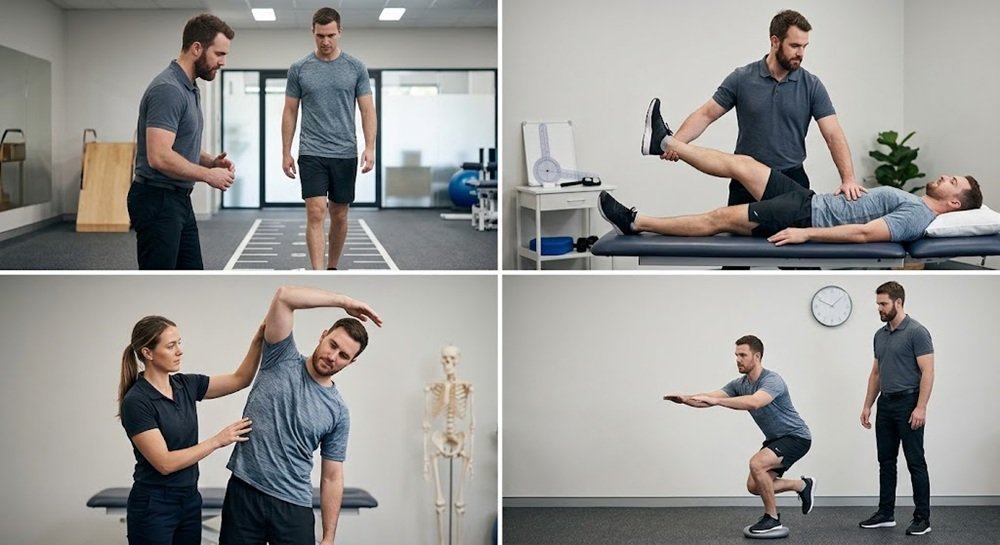
Physiotherapy focuses on helping you move and function better while managing your symptoms.
During an assessment, a physiotherapist may look at your:
Based on these findings, your physiotherapist can develop a rehabilitation plan that is appropriate for your condition.
Treatment may include exercise therapy, movement education, activity modification, and manual therapy when clinically appropriate.
Rather than relying on a single treatment technique, current guidance supports exercise-based management and staying active as important parts of care for low back pain with or without sciatica.
If you have mild symptoms and no warning signs, several strategies may help you manage your symptoms.
Try to continue your normal activities as much as your symptoms allow. Prolonged bed rest or staying in one position for long periods is generally not recommended.
Gentle movement can help maintain mobility while your symptoms settle.
If sitting makes your symptoms worse, change position regularly. Alternating between sitting, standing, and gentle movement may make daily activities more comfortable.
Appropriate exercise can help you remain active during recovery. However, exercises should be selected according to your symptoms rather than following a generic routine without guidance.
A heat pack may provide temporary comfort for some people. Always protect your skin and avoid using excessive heat.
As your symptoms improve, gradually increase your activity level rather than immediately returning to strenuous exercise, heavy lifting, or high-impact activities.
The duration of sciatica varies depending on the underlying cause and severity of symptoms.
Many people improve within several weeks to a few months. Some recover more quickly, while others experience symptoms for longer or have recurrent episodes.
If your symptoms are not improving, are becoming worse, or are interfering significantly with your daily life, professional assessment can help determine the next step.
Yes. Having sciatica once does not mean that it cannot happen again.
Staying physically active, gradually building strength, using safe lifting techniques, and addressing factors that contribute to your symptoms may help support long-term spinal and physical health.
If you experience repeated episodes, a physiotherapist can assess your movement and help develop an appropriate exercise and activity plan.
You should consider seeking professional advice if:
A professional assessment can help identify the likely cause of your symptoms and determine whether physiotherapy, medical treatment, further investigation, or another approach is appropriate.
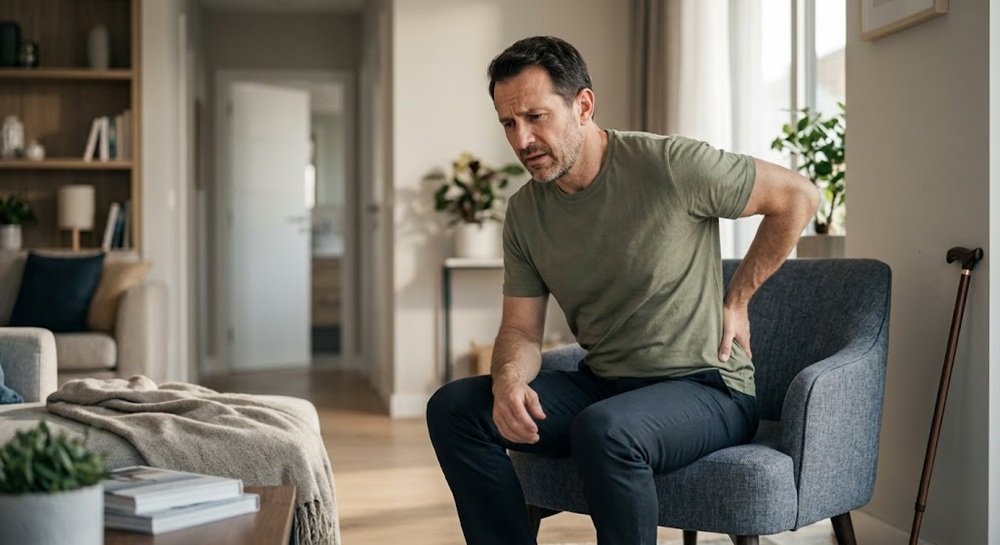
Most cases of sciatica do not require emergency treatment. However, certain symptoms can indicate serious compression of the nerves in the lower spine.
Seek emergency medical attention if you experience:
These symptoms can be associated with serious nerve compression, including cauda equina syndrome, and require urgent assessment.
Not every case of sciatica can be prevented, particularly when it is related to changes in the spine. However, maintaining an active lifestyle can support overall back health.
Helpful habits include:
Rather than focusing on maintaining one “perfect” posture all day, regular movement and maintaining physical capacity are generally more useful long-term strategies.
Need Help With Pain or Recovery?
Get a personalized treatment plan from our senior physiotherapists at PhysioCare Dubai Healthcare City.
Book online or message us on WhatsApp.
No. Lower back pain can occur without nerve involvement. Sciatica specifically refers to symptoms associated with irritation or compression of a nerve root contributing to the sciatic nerve.
Yes. Many cases improve without surgery or invasive treatment. Recovery varies, but symptoms often improve over several weeks to a few months.
Prolonged bed rest is generally not recommended. Try to remain gently active and continue normal activities as much as your symptoms allow.
For many people, gentle walking can be a practical way to remain active during recovery. However, the appropriate level of activity varies. If walking significantly worsens your symptoms or you develop increasing weakness or numbness, seek professional advice.
Yes. Physiotherapy can help manage sciatica through individualized assessment, exercise, movement education, activity modification, and selected manual therapy techniques. The specific approach depends on your symptoms and the underlying cause.
Not necessarily. MRI is not routinely recommended for every person with sciatica. A healthcare professional may recommend imaging when there are specific clinical reasons and when the result is likely to change management.
Yes. Recurrence is possible. Staying active and addressing contributing factors can help support long-term back health, although recurrence cannot always be prevented.
Sciatica can cause pain, tingling, numbness, or weakness that travels from the lower back or buttock into the leg. Although these symptoms can be uncomfortable, many people improve with time and appropriate conservative management.
Staying active, following an individualized exercise programme, and getting professional guidance when needed can support recovery and help you return to your normal activities.
If symptoms persist, worsen, or are accompanied by significant weakness, numbness around the genitals or buttocks, or changes in bladder or bowel control, seek urgent medical attention.

Jeanne Pauline D. Tejoso
Bachelor of Science in Physical Therapy — De La Salle Health Sciences Institute
Shoulder pain and stiffness can make everyday activities difficult, from reaching overhead to getting dressed or lifting objects. However, frozen shoulder and rotator cuff...
Frozen shoulder, also known as adhesive capsulitis, is a condition that causes shoulder pain, stiffness, and restricted movement. It typically progresses through different stages,...

Leave a Comment