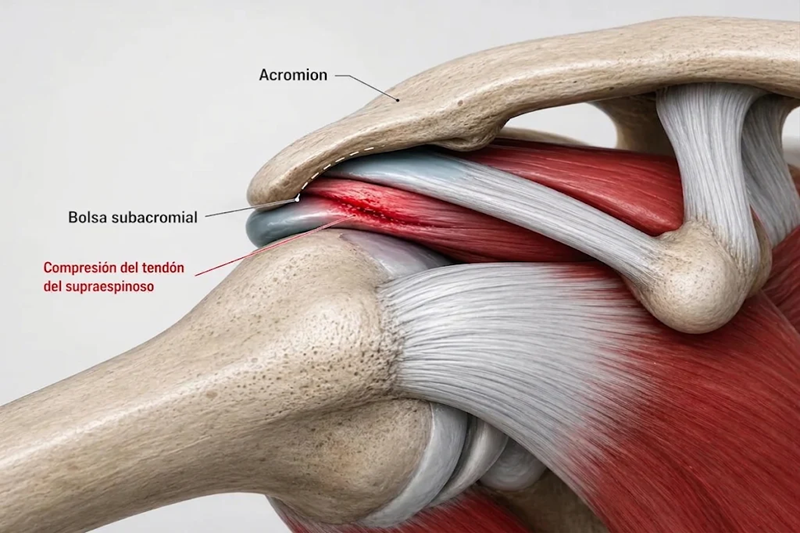
Shoulder pain can make everyday activities such as dressing, reaching overhead, and lifting objects difficult. Frozen shoulder and shoulder impingement are two common conditions that affect shoulder movement, but they have different causes and symptoms.
Understanding Frozen Shoulder vs Shoulder Impingement is important because each condition requires a different physiotherapy approach. While frozen shoulder mainly causes joint stiffness, shoulder impingement is associated with pain during specific arm movements. Physiotherapy addresses these problems through targeted exercises, manual therapy, and movement training.

Frozen shoulder, also called adhesive capsulitis, occurs when the capsule surrounding the shoulder joint becomes inflamed, thickened, and tight. This reduces the joint’s ability to move freely, causing pain and progressive stiffness.
The condition usually develops gradually and progresses through three stages: freezing, frozen, and thawing. During the freezing stage, pain becomes more noticeable and movement gradually decreases. The frozen stage is mainly characterised by stiffness, while movement gradually improves during the thawing stage.
Common symptoms include:
Frozen shoulder is more common in adults between 40 and 60 years old. Diabetes, thyroid disorders, and prolonged shoulder immobilisation are recognised risk factors.
Need Help With Pain or Recovery?
Get a personalized treatment plan from our senior physiotherapists at PhysioCare Dubai Healthcare City.
Book online or message us on WhatsApp.

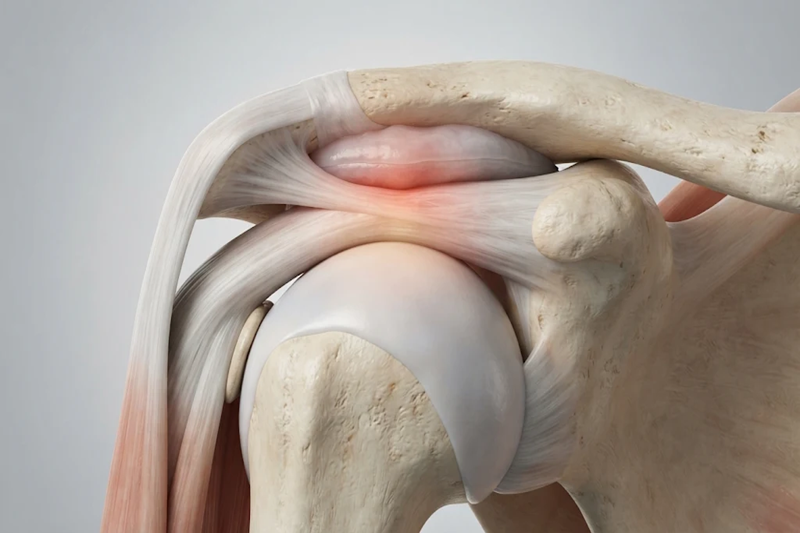
Shoulder impingement, commonly described as subacromial pain syndrome, involves pain around the rotator cuff tendons and surrounding tissues beneath the acromion.
The symptoms often become noticeable when raising the arm, reaching overhead, or performing repetitive shoulder movements. Repeated loading of the rotator cuff, reduced muscle strength, and changes in shoulder movement can contribute to the condition.
Common symptoms include:
Unlike frozen shoulder, shoulder impingement does not usually cause significant restriction of passive joint movement.
Although both conditions affect shoulder function, their underlying mechanisms are different.
| Frozen Shoulder | Shoulder Impingement |
|---|---|
| Inflammation and thickening of the joint capsule | Irritation of the rotator cuff tendons and surrounding tissues |
| Associated with diabetes and thyroid disorders | Associated with repetitive overhead activities |
| Can develop after prolonged shoulder immobilisation | Can develop with repeated shoulder loading |
| Causes progressive joint stiffness | Causes pain during certain arm movements |
Identifying these contributing factors helps physiotherapists understand the patient’s condition and select appropriate rehabilitation techniques.
The main difference between these conditions is the type of movement restriction they cause. Frozen shoulder limits overall shoulder mobility, whereas shoulder impingement mainly causes pain during particular movements.
| Feature | Frozen Shoulder | Shoulder Impingement |
|---|---|---|
| Main problem | Joint stiffness | Movement-related pain |
| Arm elevation | Significantly restricted | Often painful |
| Passive movement | Restricted | Usually preserved |
| External rotation | Commonly limited | Generally less restricted |
| Night pain | Common | Can occur |
| Reaching behind the back | Often difficult | Usually less restricted |
One important part of the assessment is checking passive range of motion. The physiotherapist moves the patient’s relaxed arm to evaluate joint mobility without relying on the patient’s muscle effort.
In frozen shoulder, both active and passive movements are typically restricted. With shoulder impingement, passive movement is generally better preserved, even when active movement causes discomfort.
These findings help distinguish the conditions, although a complete clinical assessment is necessary to establish the diagnosis.

A physiotherapist evaluates the patient’s symptoms, medical history, and shoulder function before developing a treatment plan.
The assessment may include:
Specific clinical tests, including the Hawkins-Kennedy test, may also be used when shoulder impingement is suspected.
Imaging such as X-rays, ultrasound, or MRI may be recommended when additional investigation is needed to assess other shoulder problems.
Physiotherapy is central to the conservative management of both conditions. However, treatment techniques must match the patient’s specific movement limitations, pain levels, and rehabilitation goals.
For frozen shoulder, treatment focuses on restoring joint mobility and reducing stiffness. For shoulder impingement, the priority is improving rotator cuff strength, shoulder blade control, and tolerance to arm movements.
The following techniques address the different rehabilitation needs:
| Physiotherapy Technique | Application in Frozen Shoulder | Application in Shoulder Impingement |
|---|---|---|
| Manual therapy | Joint mobilisation to improve restricted shoulder movement | Soft tissue techniques and appropriate mobilisation to address movement-related discomfort |
| Range-of-motion exercises | Gentle exercises to maintain and gradually restore mobility | Controlled arm movements to maintain comfortable shoulder function |
| Stretching exercises | Targeting restricted shoulder movements, particularly external rotation | Addressing relevant muscle flexibility limitations |
| Strengthening exercises | Gradually strengthening shoulder muscles as mobility improves | Strengthening the rotator cuff and supporting muscles |
| Scapular stabilisation | Improving coordinated shoulder blade movement | Improving scapular control during arm elevation |
Manual Therapy
Manual therapy involves hands-on techniques performed by a physiotherapist to address joint and soft tissue restrictions. In frozen shoulder, joint mobilisation is used to target restricted movement. For shoulder impingement, appropriate manual techniques can help manage discomfort and support active rehabilitation.
Range-of-Motion Exercises
These exercises help patients move their shoulders through controlled movements. In frozen shoulder, they focus on gradually improving restricted mobility. In shoulder impingement, they help maintain comfortable movement without repeatedly aggravating symptoms.
Rotator Cuff Strengthening
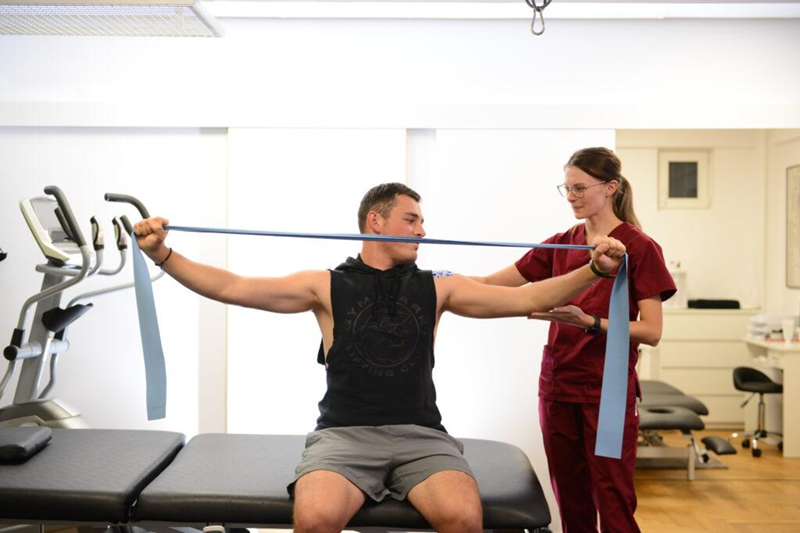
Strengthening exercises are particularly important for shoulder impingement. They target the muscles responsible for supporting and controlling the shoulder joint. Resistance bands and controlled arm movements can be used, with exercise intensity adjusted as strength improves.
Scapular Stabilisation Exercises
The shoulder blade plays an important role in normal arm movement. Scapular stabilisation exercises improve the coordination of the muscles around the shoulder blade, supporting better shoulder mechanics during reaching and lifting activities.
Progressive Functional Training
As pain and movement limitations improve, physiotherapy progresses towards everyday activities. Patients practise reaching, lifting, and other movements relevant to their work, sports, and daily routines.
For patients with frozen shoulder, treatment intensity should be adjusted according to the stage of the condition and tissue irritability. Aggressive stretching can increase pain when the shoulder is highly sensitive.
For further information about available care, visit Frozen Shoulder Treatment in Dubai.
The benefits of physiotherapy extend beyond reducing shoulder pain. A structured rehabilitation programme addresses the physical limitations that interfere with everyday activities.
Depending on the condition, physiotherapy helps patients:
The 2025 clinical practice guideline for rotator cuff tendinopathy, published in the Journal of Orthopaedic & Sports Physical Therapy, supports individualised education and active rehabilitation as important components of treatment.
Consider a physiotherapy assessment if you experience persistent shoulder pain, increasing stiffness, difficulty raising your arm, or discomfort during daily activities.
A physiotherapist can assess shoulder movement and muscle function to develop an appropriate rehabilitation programme. Sudden severe pain or significant weakness after an injury requires prompt medical assessment.
Need Help With Pain or Recovery?
Get a personalized treatment plan from our senior physiotherapists at PhysioCare Dubai Healthcare City.
Book online or message us on WhatsApp.
Can Frozen Shoulder and Shoulder Impingement Occur Together?
Yes. Both conditions can affect the same shoulder, causing a combination of stiffness and movement-related pain.
Which Condition Causes More Stiffness?
Frozen shoulder generally causes more stiffness because the joint capsule becomes thickened and tight. Shoulder impingement mainly causes pain during specific movements.
Can Shoulder Impingement Turn Into Frozen Shoulder?
No. Shoulder impingement does not directly cause frozen shoulder. However, prolonged avoidance of shoulder movement can contribute to joint stiffness.
How Long Does Physiotherapy Take to Improve Shoulder Pain?
Recovery depends on the condition and its severity. Shoulder impingement may improve over several weeks, while frozen shoulder can take months or longer.
Frozen shoulder and shoulder impingement affect shoulder movement in different ways and require specific physiotherapy approaches. While frozen shoulder rehabilitation focuses on restoring joint mobility, shoulder impingement treatment prioritises rotator cuff strengthening and improved shoulder mechanics.
Through manual therapy, targeted exercises, scapular stabilisation, and progressive functional training, physiotherapy addresses the movement limitations associated with both conditions. An individualised rehabilitation programme helps patients improve shoulder function and return to their everyday activities.
Prefer Physiocare.ae in Google — add us as a preferred source so our physiotherapy guides show first for you in Top Stories.

Abigail T. De Guzman
DHA-Licensed Physiotherapist
That nagging pain beneath your shoulder blade may be more than muscle tension. Uncover possible triggers and the best ways to get lasting relief.
Could hormonal changes be behind your shoulder pain? See why frozen shoulder affects women during menopause and what can ease the pain.

Leave a Comment