admin
admin
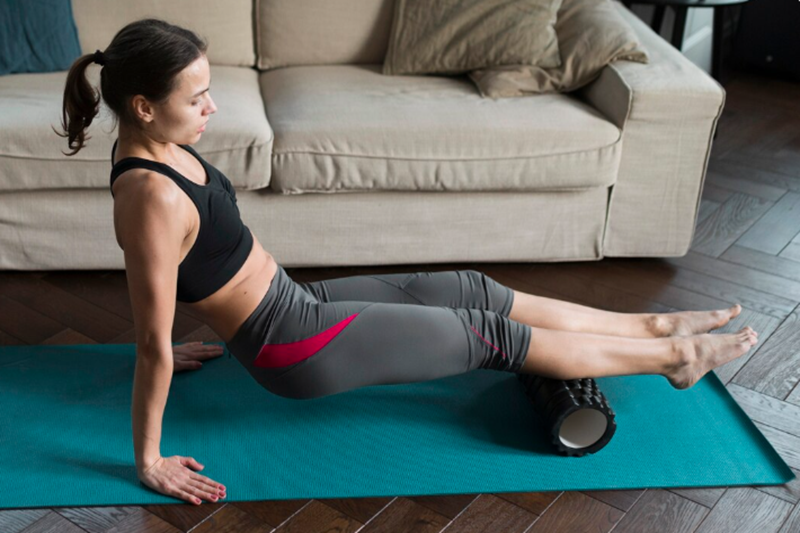
Can simple exercises help reduce back stiffness and improve spinal mobility? For many people, gentle movement can be a useful part of managing back discomfort and maintaining mobility.
In this guide, you’ll learn 12 spinal decompression exercises at home, progressing from gentle beginner movements to exercises that require greater strength, stability, and control. You’ll also learn how these exercises may support spinal mobility, how to progress safely, and when back pain requires professional assessment.
Important: Spinal decompression exercises are not a substitute for an individualized assessment or treatment plan. The right exercises depend on your symptoms, physical condition, and underlying cause of back pain.
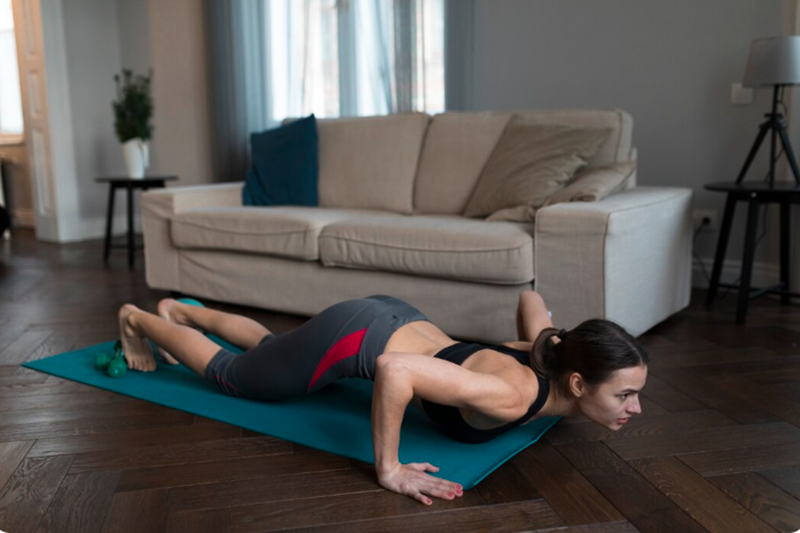
Spinal decompression exercises are movements designed to improve spinal mobility, flexibility, muscular control, and the strength of the muscles that support the spine.
The term “decompression” does not mean that an exercise physically pulls the vertebrae apart or puts a spinal disc back into its original position. Instead, these exercises generally involve controlled mobility, stretching, strengthening, and functional movement.
For many people with uncomplicated back pain, staying active and gradually returning to normal movement can be more helpful than prolonged rest. However, not every exercise is appropriate for every condition.
Your symptoms and how your body responds to movement should guide exercise selection.
Need Help With Pain or Recovery?
Our senior physiotherapists at PhysioCare Dubai Healthcare City can assess your needs and design a personalized treatment plan.
Book a consultation online or message us on WhatsApp — we are here to help.
For many people, gentle movement can be a safe part of managing uncomplicated back discomfort. However, an exercise that feels helpful for one person may aggravate symptoms in another.
Start with gentle movements, use a comfortable range of motion, and avoid forcing a stretch or pushing through worsening pain. If you have a diagnosed spinal condition, recent injury, significant leg symptoms, or you are unsure whether exercise is appropriate for you, consult a qualified healthcare professional before starting a new routine.
The following exercises progress from gentle mobility movements to exercises that require greater strength, stability, and movement control.
You do not need to perform all 12 exercises in one session. Start with movements appropriate for your current ability and gradually progress as your control and tolerance improve.
Level: Beginner
Lie on your back with your knees bent and your feet flat on the floor.
Gently engage your abdominal muscles and tilt your pelvis so your lower back moves slightly toward the floor. Slowly return to a neutral position.
Repeat the movement in a controlled manner without forcing your lower back.
Why try it?
Pelvic tilts provide a gentle way to move the lower back and pelvis while helping you become more aware of spinal movement and pelvic control.
Level: Beginner
Lie comfortably on your back with both knees bent.
Slowly bring one knee toward your chest and hold it gently with your hands. Avoid pulling the knee forcefully toward your body.
Return to the starting position and repeat with the opposite leg.
Why try it?
This simple movement provides gentle mobility for the lower back and hip while allowing you to control the intensity of the stretch.
Level: Beginner
Lie on your back with your knees bent and your feet supported on the floor.
Slowly bring both knees toward your chest and hold the position briefly if it feels comfortable. Then gradually lower your legs.
Avoid forcing your knees closer to your body.
If this exercise increases your back symptoms, return to the single knee-to-chest stretch or choose another movement.
Why try it?
The exercise gently moves the lower back and hips through a flexed position, but it may not be suitable for everyone.

Level: Beginner to Intermediate
Lie on your back with your knees bent and your feet resting on the floor.
Keep your knees together and slowly move them toward one side while keeping your shoulders relatively relaxed against the floor.
Return to the center and repeat on the other side.
Move only through a comfortable range. You do not need to lower your knees all the way to the floor.
Why try it?
Knee rolls introduce gentle rotational movement to the lower back and hips while encouraging controlled spinal mobility.
Level: Beginner to Intermediate
Start on your hands and knees with your hands beneath your shoulders and your knees beneath your hips.
Slowly round your back upward. Then gradually move in the opposite direction, allowing your spine to extend comfortably.
Continue moving between the two positions at a steady pace.
Focus on smooth, controlled movement rather than trying to achieve the largest possible range of motion.
Why try it?
Cat-Cow can help you move the spine through different positions while developing awareness and control.
Level: Beginner to Intermediate
Start on your hands and knees.
Slowly move your hips backward toward your heels while reaching your arms forward. Allow your back and hips to relax without forcing the position.
Hold briefly, then return to the starting position.
Why try it?
Child’s Pose can provide a gentle stretch through the back and hips. However, because it involves spinal flexion, it may not be comfortable for everyone.
If bending forward increases your symptoms, choose a different exercise.
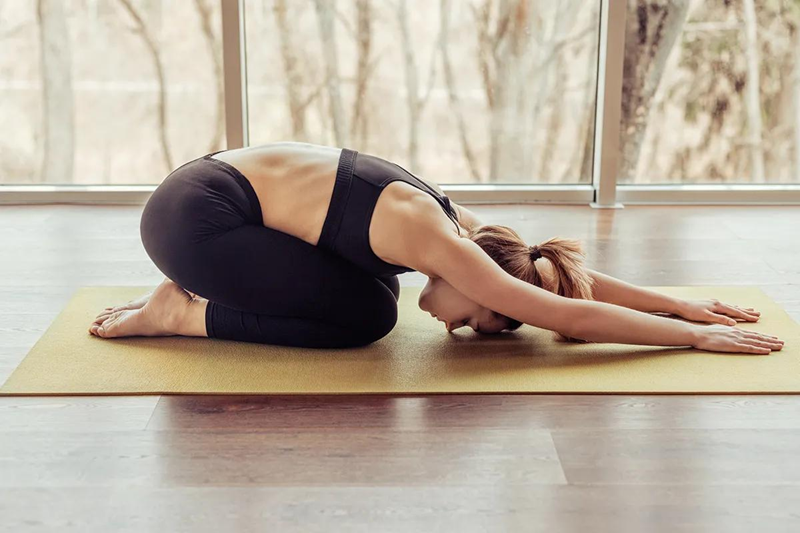
Level: Intermediate
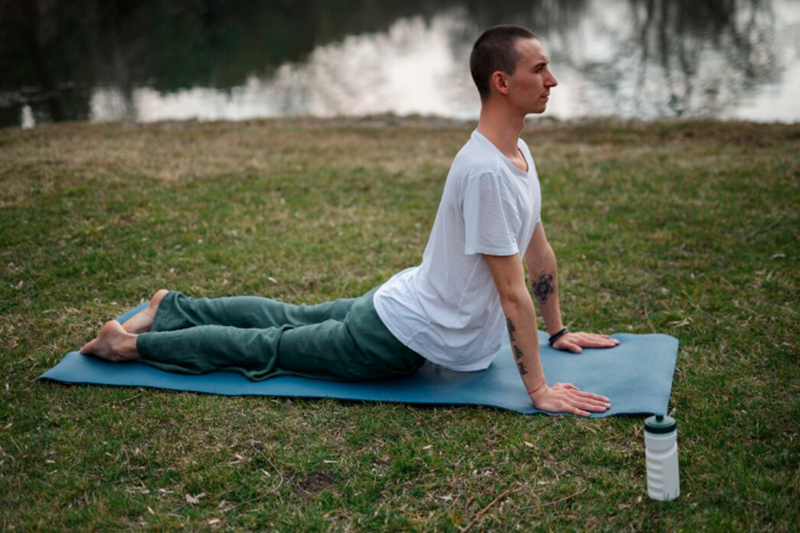
Lie on your stomach with your hands positioned near your shoulders.
Gently press your upper body upward while allowing your pelvis and legs to remain relaxed. Move only as far as feels comfortable.
Pause briefly, then slowly lower yourself back down.
Why try it?
The prone press-up introduces spinal extension, which some people may tolerate well. However, extension-based exercises are not appropriate for every type of back pain.
Stop the exercise if it clearly increases your symptoms.
Level: Intermediate
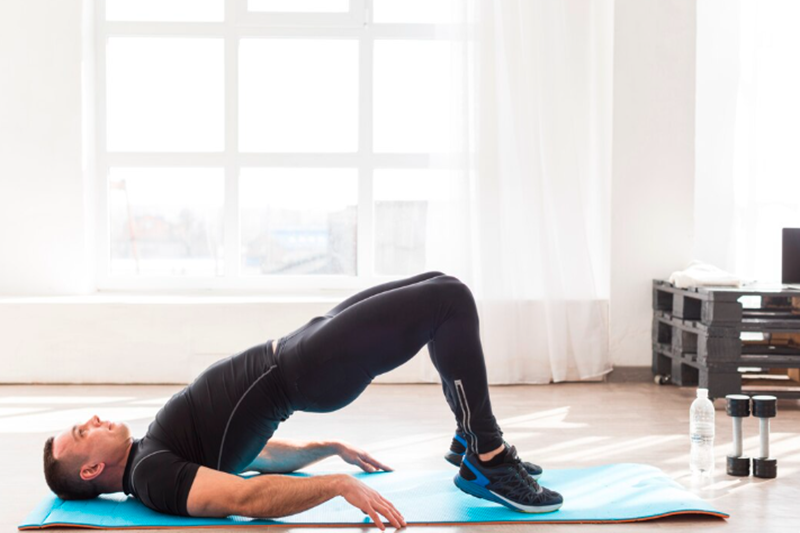
Lie on your back with your knees bent and your feet flat on the floor.
Gently engage your abdominal and buttock muscles, then lift your hips from the floor.
Hold briefly at the top and slowly lower your hips.
Why try it?
The glute bridge adds strengthening to a spinal mobility routine. It works the gluteal muscles while requiring control from the trunk and pelvis.
As your strength improves, controlled bridging can help prepare you for more demanding functional movements.
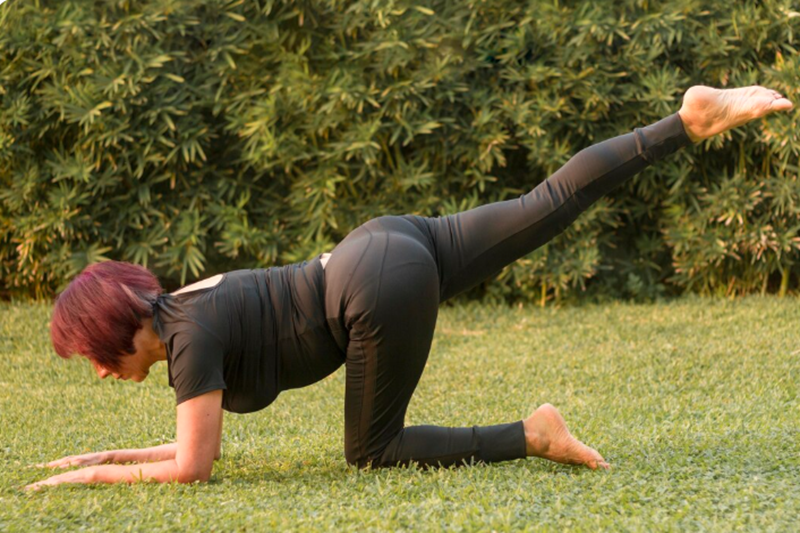
Level: Intermediate
Begin on your hands and knees.
Slowly extend one arm and the opposite leg while keeping your torso as stable as possible.
Pause briefly, then return to the starting position and switch sides.
The goal is controlled movement rather than lifting your arm and leg as high as possible.
Why try it?
Bird Dog challenges trunk stability, coordination, and control while the arms and legs move.
If your lower back starts to arch excessively or you lose control of your torso, reduce the range of movement.
Level: Intermediate to Advanced
Lie on your back with your knees bent and lifted and your arms raised.
Gently engage your abdominal muscles. Slowly lower one leg and the opposite arm while maintaining control of your pelvis and trunk.
Return to the starting position and switch sides.
If you cannot maintain control, reduce the range of movement or perform a simpler variation.
Why try it?
Dead Bug develops core control while the arms and legs move independently. This makes it a useful progression from basic mobility exercises toward more demanding stability work.
Level: Advanced
Stand with your feet approximately shoulder-width apart.
Bend through your hips and knees to lower your body as far as you can comfortably control.
Then push through your feet to return to standing.
Keep the movement controlled and avoid allowing your back to collapse into a position you cannot control.
Why try it?
Squats are not a traditional spinal stretching exercise. Instead, they develop functional strength needed for activities such as sitting, standing, and lifting.
They can therefore be useful when progressing from basic spinal mobility toward everyday movement.
Level: Advanced
Stand comfortably with your feet apart and place your hands on your hips.
Push your hips backward while allowing your upper body to lean forward. Keep your spine controlled throughout the movement.
Then drive your hips forward to return to standing.
Why try it?
The hip hinge teaches you to bend primarily through your hips while maintaining control of your spine.
This movement pattern can be useful when returning to activities that involve bending, lifting, or moving objects from the floor.
Progression should depend on how well you can perform an exercise rather than following a fixed timeline.
A practical progression is:
Mobility → Control → Strength → Stability → Functional movement
When a movement feels comfortable and you can perform it with good control, you can gradually increase repetitions or progress to a more challenging variation.
There is no benefit to rushing into advanced exercises if basic movements are still difficult or consistently aggravate your symptoms.
There is no universal exercise schedule for everyone with back pain.
If you are starting from a low level of activity, begin with a manageable amount of exercise and gradually increase your activity as your body adapts.
Pay attention to how your symptoms respond both during and after exercise.
If a particular movement repeatedly makes your symptoms worse, reduce the range of motion, modify the exercise, or stop it and seek professional advice when appropriate.
For most people, consistency and gradual progression are more practical than occasional high-intensity sessions.
You do not need to reach the maximum possible stretch or range of motion.
Controlled movement through a comfortable range is a better starting point than forcing your body into a position it does not tolerate.
Adding several challenging exercises at once can place unnecessary stress on your body.
Start with manageable movements and increase difficulty gradually as your strength and control improve.
Back care is not only about flexibility.
As your ability improves, strength, coordination, stability, and confidence with everyday movements also become important.
That is why this routine progresses from gentle mobility exercises to strengthening and functional movements.
Exercise should not be used to push through symptoms that are clearly becoming worse.
If a particular movement repeatedly aggravates your symptoms, stop and reassess whether it is appropriate for your condition.
Exercise can be part of managing some disc-related back problems, but these exercises cannot guarantee that a herniated disc will return to its original position.
People can respond differently to the same movement. For example, some individuals may tolerate extension-based exercises well, while others may find certain positions uncomfortable.
This is why following a routine designed for someone else is not always appropriate.
If you have significant leg pain, numbness, weakness, or other symptoms that may indicate nerve involvement, a professional assessment is important before continuing with an exercise program.
Mild stretching or muscular effort can occur during exercise, but significant or progressively worsening pain should not be ignored.
Stop an exercise and seek appropriate medical advice if your symptoms become substantially worse or you develop new symptoms.
Urgent medical assessment is particularly important if back pain occurs with:
You should also seek professional medical advice if your back pain is persistent, worsening, or significantly affecting your daily activities.
Need Help With Pain or Recovery?
Our senior physiotherapists at PhysioCare Dubai Healthcare City can assess your needs and design a personalized treatment plan.
Book a consultation online or message us on WhatsApp — we are here to help.
Pelvic tilts, single knee-to-chest stretches, and knee rolls are simple options for beginners when they can be performed comfortably. The right exercise depends on your symptoms and physical condition.
Some gentle movements may be suitable for regular practice, but frequency should depend on your symptoms and how your body responds to exercise.
They may help some people improve mobility and manage back discomfort, but results depend on the underlying cause of the pain and the individual’s response to exercise.
No. Most spinal decompression exercises at home can be performed without specialized equipment. An exercise mat may make floor exercises more comfortable, but it is not essential.
Not always. Persistent, severe, worsening, or unusual symptoms may require assessment by a physiotherapist or other qualified healthcare professional.
The right spinal decompression exercises can help improve mobility, strength, and control when they are appropriate for your condition. Start with gentle movements, focus on proper control, and progress gradually as your tolerance improves.
If your back pain is severe, persistent, worsening, or accompanied by numbness, weakness, or bladder or bowel changes, seek professional assessment rather than relying on exercise.
Consult with our senior physiotherapists and receive a customized treatment plan tailored for your individual needs.
What if better recovery could improve your training just as much as a better workout? Effective Muscle Recovery helps your body repair after exercise,...
Can’t lift your arm, reach behind your back, or sleep comfortably on one side? It may be more than simple stiffness. A frozen shoulder...