Dr. Sarah Henderson
In the fast-paced world of professional athletics and high-intensity fitness training, recovery is no longer seen as a passive period of rest. Instead, it is recognized as an active, vital component of athletic performance. For athletes based in Dubai—a city known for its competitive sporting events, running clubs, and modern training facilities—minimizing downtime and supporting tissue repair is crucial. Over the last decade, advancements in physical therapy technology have introduced modalities that go beyond traditional icing and manual stretching. Among these technologies are High-Intensity Laser Therapy (HILT) and Tecar Therapy, which are used in sports medicine and physiotherapy to support recovery.
Both HILT and Tecar therapy are designed to stimulate the body's natural healing processes at a cellular level, yet they do so through different, complementary mechanisms. When combined, these therapies may create a synergistic treatment effect that can support shorter recovery times for acute muscle tears, chronic tendonitis, ligament sprains, and joint inflammation. This comprehensive article explores the science behind these two modalities, how they interact, and how they are used in sports rehabilitation at our physiotherapy clinic in Dubai.
To appreciate the power of High-Intensity Laser Therapy, it is helpful to contrast it with standard low-level laser therapy (LLLT), often referred to as "cold laser." While cold lasers can only penetrate a few millimeters of skin and are primarily used for superficial wound healing, HILT operates at significantly higher power levels (often up to 15 watts or more) and uses specific wavelengths of light (typically in the near-infrared spectrum, around 810nm to 1064nm). This high power allows the laser light to penetrate deep into muscles, tendons, ligaments, and joint capsules—up to 8 to 10 centimeters beneath the skin.
The fundamental biological mechanism driving HILT is called photobiomodulation. When the laser light penetrates damaged tissue, it is absorbed by cellular receptors, specifically cytochrome c oxidase inside the mitochondria (the energy factories of the cells). This absorption triggers a cascade of beneficial biochemical reactions:
Ready to Support Your Sports Recovery?
High-Intensity Laser and TECAR therapy can help athletes manage soft-tissue injuries and return to training with a clearer recovery plan.
Explore Laser Therapy at PhysioCare Dubai or message us on WhatsApp.
While HILT utilizes light energy, Tecar Therapy (which stands for Transfer of Energy Capacitive and Resistive) harnesses radiofrequency energy. Operating in the high-frequency range (usually between 300 kHz and 1.2 MHz), Tecar therapy stimulates the movement of electrolytes within the body's tissues. This rapid oscillation of charged particles generates heat from within the tissue itself—a process known as endogenous thermotherapy.
This internal heat generation is fundamentally different from external heat sources like hot packs or infrared lamps, which only heat the surface of the skin. Tecar therapy can target deep structures based on two distinct operational modes:
By increasing deep tissue temperature, Tecar therapy dramatically increases local blood flow (hyperemia), which boosts cellular metabolism, relaxes muscles, improves joint flexibility, and promotes lymphatic drainage to clear inflammatory waste.
At Physiocare Physiotherapy Center Dubai, our senior physiotherapists often utilize HILT and Tecar therapy in a combined, structured treatment plan. The combination creates a multi-layered approach that addresses both cellular metabolism and the macroscopic tissue environment.
First, Tecar therapy is used to prepare the tissue. By generating endogenous heat, it opens up the blood vessels, relaxes surrounding muscle guarding, and increases the flexibility of collagen fibers. This localized increase in circulation and tissue hydration creates a highly receptive environment for the subsequent laser application.
Following Tecar therapy, the application of High-Intensity Laser Therapy (HILT) delivers targeted photonic energy. Because the blood vessels are already dilated and tissues are well-oxygenated from the Tecar treatment, the cells are primed to absorb the laser energy. The HILT session then supercharges the mitochondria, triggering rapid ATP synthesis and accelerating cellular regeneration. Additionally, the immediate pain-relieving effects of HILT allow the patient to comfortably perform therapeutic rehabilitation exercises immediately after the session, promoting healthy movement patterns and preventing joint stiffness.
"Combining radiofrequency energy and high-power laser light addresses both fluid dynamics and cellular energy. It is the closest thing to fast-tracking the biological healing clock for athletic injuries, offering sports rehabilitation in Dubai that yields tangible, long-term results."
This dual-technology approach is highly effective for a wide range of sports-related injuries, including:
At Physiocare Physiotherapy Center, we combine modern medical technology with customized treatment plans. Our clinic in Dubai Healthcare City is staffed by senior clinical specialists who hold international certifications and possess experience in treating athletes and fitness enthusiasts. We do not believe in a one-size-fits-all approach; instead, we analyze your biomechanics, movement patterns, and specific recovery goals to formulate a plan tailored to you.
What to Expect During a Session: A combined HILT and Tecar therapy session at our clinic is a comfortable, relaxing, and entirely non-invasive experience. During the Tecar portion, the therapist applies a conductive cream and gently massages the target area using capacitive or resistive handpieces. Patients experience a deeply soothing, warm sensation that immediately relieves muscle tension.
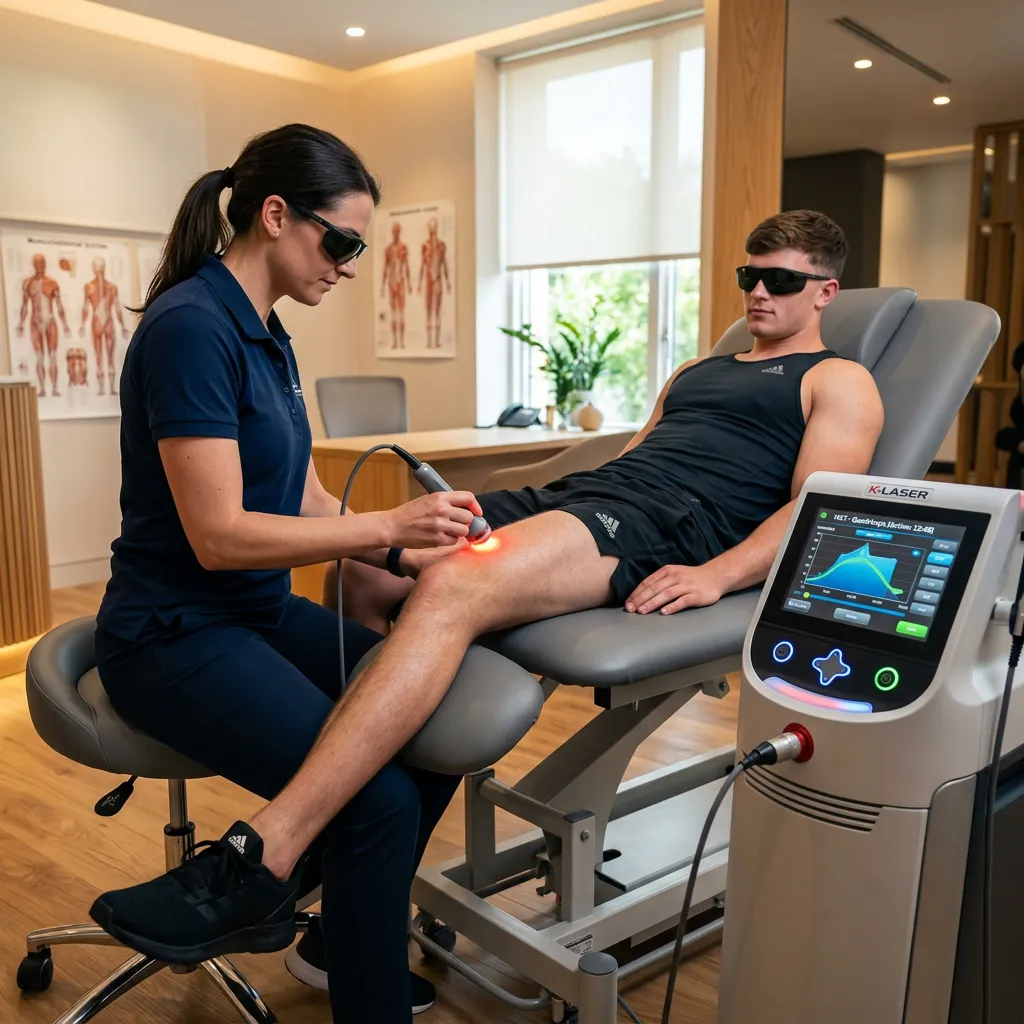
For the HILT portion, both the patient and the therapist wear specialized protective eyewear. The therapist sweeps the laser handpiece over the injured tissue. Patients may feel a mild, pleasant warmth, but the procedure is completely painless. The entire session takes between 30 to 45 minutes, after which patients can immediately resume their daily activities with zero downtime.
If you are dealing with a sports injury or looking to optimize your recovery between intense training cycles, contact Physiocare Physiotherapy Center in Dubai today. Our team of senior specialists will customize a treatment plan utilizing modern equipment and evidence-based techniques to help you return to your activities safely.
Massage therapy includes a variety of techniques that can be used for relaxation, muscle tension, general discomfort, and certain physical conditions. From gentle Swedish...
Can simple exercises help reduce back stiffness and improve spinal mobility? For many people, gentle movement can be a useful part of managing back...