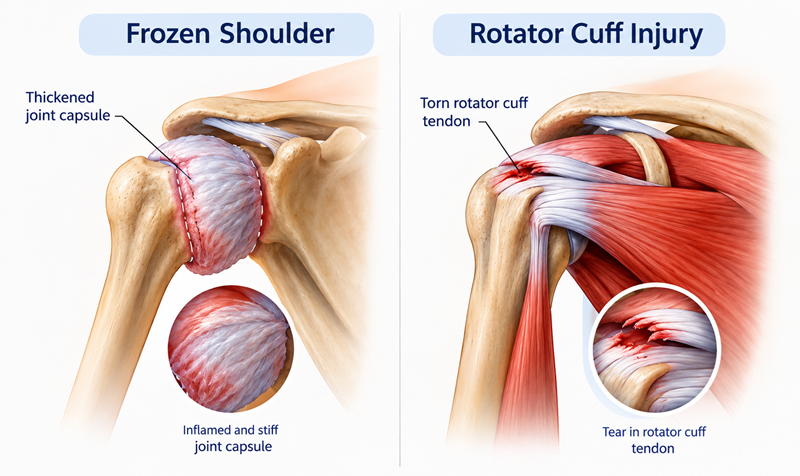
Shoulder pain and stiffness can make everyday activities difficult, from reaching overhead to getting dressed or lifting objects. However, frozen shoulder and rotator cuff injuries affect different structures and require different physiotherapy approaches.
Understanding Frozen Shoulder vs Rotator Cuff Injury is important because each condition requires a treatment plan tailored to its main limitations. Physiotherapy for frozen shoulder focuses on gradually restoring joint mobility, while rotator cuff rehabilitation emphasizes progressive strengthening, shoulder control, and improved tolerance to daily activities. A physiotherapy assessment helps determine which techniques and exercises are appropriate for each patient.

Frozen shoulder, also known as adhesive capsulitis, occurs when the capsule surrounding the shoulder joint becomes thickened and tight. This causes pain and progressive stiffness, restricting both active and passive shoulder movement.
A rotator cuff injury affects one or more of the four muscles and tendons responsible for shoulder stability and movement. Injuries range from tendinopathy to partial or full-thickness tendon tears, with symptoms varying according to severity.
The main clinical distinction is that frozen shoulder typically causes substantial restriction in shoulder mobility, while rotator cuff injuries commonly cause pain and weakness during lifting or overhead activities. Because these symptoms can overlap, a physiotherapist assesses movement, strength, pain, and functional limitations before selecting an appropriate rehabilitation approach.
Need Help With Pain or Recovery?
Get a personalized treatment plan from our senior physiotherapists at PhysioCare Dubai Healthcare City.
Book online or message us on WhatsApp.

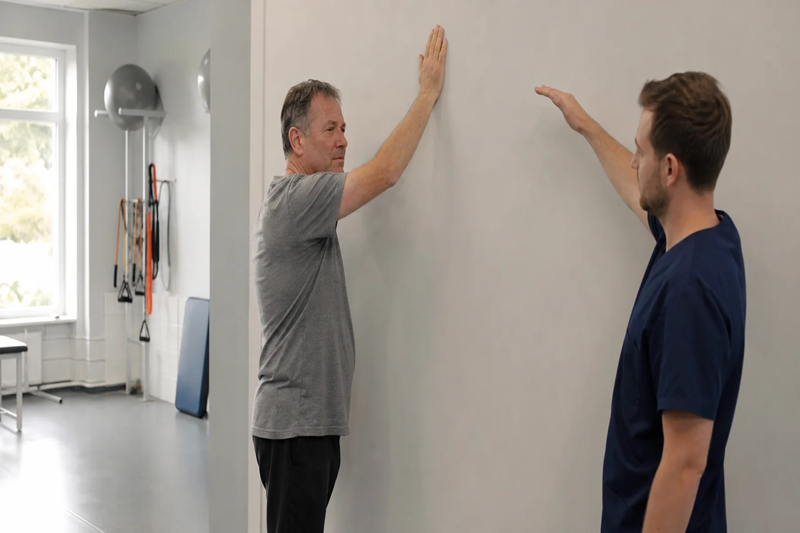
Physiotherapy for frozen shoulder focuses on reducing movement-related discomfort and progressively restoring the shoulder’s range of motion. The treatment plan is adjusted according to pain levels, stiffness, and the patient’s ability to tolerate movement.
Shoulder joint mobilization involves specific manual techniques performed by a physiotherapist to address restricted movement. The direction and intensity of mobilization depend on the patient’s assessment findings and symptom tolerance.
Controlled stretching targets movements such as shoulder rotation, arm elevation, and reaching behind the back. These techniques aim to gradually improve flexibility and make daily activities easier. Aggressive stretching should be avoided when it significantly aggravates pain.
Therapeutic exercises help patients progressively regain functional shoulder movement. Depending on the degree of stiffness, a physiotherapist may prescribe assisted arm raises, gentle rotation exercises, and active movements within a comfortable range.
As mobility improves and pain becomes more manageable, exercises can be progressed to include strengthening. The physiotherapist also provides guidance on home exercises to help maintain progress between sessions.
The physiotherapist monitors changes in shoulder movement, pain, and daily function to determine whether treatment is progressing appropriately. If an exercise causes a substantial or persistent increase in symptoms, its range, intensity, or frequency may need adjustment.
For further information about frozen shoulder treatment, visit Physio Care’s Frozen Shoulder and Tendinitis page.

Physiotherapy for rotator cuff injuries focuses on improving muscle strength, shoulder control, and the tendons’ ability to tolerate everyday demands. Treatment depends on whether the patient has tendinopathy, a partial tear, or a more significant tendon injury.
Progressive resistance training is a key component of rehabilitation for many rotator cuff tendon conditions. The physiotherapist selects exercises according to the patient’s current strength, symptoms, and tolerance to loading.
Isometric exercises allow the shoulder muscles to work against resistance without significant joint movement. As the patient progresses, resistance exercises can be introduced to improve muscle strength and endurance. Exercise difficulty is increased gradually according to the patient’s response.
The aim is to improve the shoulder’s capacity for lifting, reaching, and other daily activities without repeatedly aggravating symptoms.
The shoulder blade helps coordinate arm movement and contributes to shoulder stability. When an assessment identifies reduced strength or control in the surrounding muscles, scapular exercises may be added to the rehabilitation program.
These exercises complement rotator cuff strengthening by improving coordination during reaching, lifting, and overhead movements. The physiotherapist chooses exercises based on the patient’s specific limitations rather than applying the same routine to every injury.
Selected manual therapy techniques may be used alongside exercise to help manage pain and improve short-term movement tolerance. However, manual therapy should support active rehabilitation rather than replace strengthening exercises.
Activity modification is also important. The physiotherapist may recommend temporarily adjusting heavy lifting, repetitive overhead movements, or other activities that aggravate symptoms. These activities can be reintroduced progressively as strength and load tolerance improve.
Significant tears, particularly those associated with sudden weakness after an injury, may require orthopedic assessment to determine whether conservative or surgical management is appropriate.
Although both conditions can benefit from physiotherapy, their treatment priorities differ according to the main impairment.
| Physiotherapy focus | Frozen shoulder | Rotator cuff injury |
|---|---|---|
| Primary goal | Restore restricted shoulder mobility | Improve strength and load tolerance |
| Manual therapy | Gentle joint mobilization to address stiffness | Selected techniques to manage pain and movement limitations |
| Stretching | Controlled stretching to improve range of motion | Used when specific mobility restrictions are present |
| Strengthening | Progressed as pain and mobility allow | A central component of many rehabilitation programs |
| Exercise progression | Guided by stiffness, pain, and movement improvements | Guided by strength, symptoms, and tolerance to loading |
These approaches are not mutually exclusive. A patient with frozen shoulder may also need strengthening, while someone with a rotator cuff injury may benefit from mobility exercises. The physiotherapist determines the appropriate combination through assessment and ongoing progress monitoring.

The right treatment plan depends on the diagnosis, symptom severity, functional limitations, and the patient’s goals. A physiotherapist evaluates shoulder mobility, strength, pain response, and the movements that cause difficulty before selecting appropriate interventions.
For frozen shoulder, treatment generally emphasizes gradual mobility restoration and comfortable movement. For rotator cuff tendinopathy and selected partial tears, active rehabilitation commonly prioritizes progressive resistance training, movement control, and load management.
At a physiotherapy center in Dubai, patients can seek an assessment to understand their shoulder limitations and receive guidance on an appropriate rehabilitation program. Treatment should be adjusted as symptoms and functional abilities change.
Consider a professional assessment if shoulder pain or stiffness persists, affects sleep, limits overhead movement, or interferes with dressing and other daily activities. Early evaluation can help identify the likely cause and guide appropriate treatment.
Seek prompt medical assessment after a significant shoulder injury, particularly if you experience sudden weakness or cannot raise your arm. Severe pain, visible deformity, or a sudden loss of shoulder function may indicate an injury that requires further investigation.
Shoulder pain accompanied by chest pain or shortness of breath requires emergency medical attention.
Need Help With Pain or Recovery?
Get a personalized treatment plan from our senior physiotherapists at PhysioCare Dubai Healthcare City.
Book online or message us on WhatsApp.
Yes. Physiotherapy can help improve shoulder mobility and daily function through appropriate joint mobilization, controlled stretching, and therapeutic exercises. Treatment intensity should match the patient’s pain levels and stage of the condition.
Depending on the injury, treatment may include isometric exercises, progressive resistance training, and scapular strengthening. The physiotherapist adjusts the exercises according to the patient’s symptoms, strength, and ability to tolerate loading.
Recovery varies depending on the diagnosis, severity, duration of symptoms, and response to treatment. Frozen shoulder may take several months or longer to improve, while rotator cuff rehabilitation also varies according to the type and severity of the injury.
Consider an assessment if shoulder pain, stiffness, or weakness interferes with sleep or daily activities. Sudden weakness or an inability to raise the arm after an injury requires prompt medical assessment.
Frozen shoulder and rotator cuff injuries can cause similar symptoms, but their physiotherapy priorities differ. Frozen shoulder rehabilitation focuses on gradually restoring mobility, while rotator cuff rehabilitation commonly emphasizes progressive strengthening, shoulder control, and improved load tolerance.
An individualized physiotherapy program can help improve movement and function while supporting a gradual return to daily activities. Accurate assessment is essential for choosing suitable techniques, monitoring progress, and identifying injuries that require further medical care.

Abigail T. De Guzman
Registered Physical Therapist (PTRP)
Frozen shoulder, also known as adhesive capsulitis, is a condition that causes shoulder pain, stiffness, and restricted movement. It typically progresses through different stages,...
Early Intervention, Specialized Treatment, and Facial Muscle Recovery Bell's palsy is a condition that causes sudden weakness or paralysis of the muscles on one...

Leave a Comment